Key Takeaways
Texas dog bite laws require proof of owner knowledge, not just a bite.
- Liability depends on whether the owner knew the dog was dangerous.
Dangerous behavior can establish liability even without a prior bite.
- Courts consider repeated aggression, like lunging or snapping.
Multiple parties may share responsibility for a dog bite injury.
- Owners, landlords, or caretakers can all be held liable.
Evidence plays a major role in proving a dog bite claim.
- Photos, reports, and witnesses establish what happened.
Quick legal action helps protect your Texas dog bite case.
- Early steps preserve evidence and strengthen liability arguments.
Texas Dog Bite Laws Explained: Navigating the ‘One Bite Rule’ in Travis County
Dog bite claims in Texas often feel straightforward at first glance. You get bitten, so you assume liability automatically follows the owner. However, this assumption usually doesn’t hold up once you look at how courts actually apply dog bite laws in Texas.
Texas doesn’t treat every bite the same way. Instead, liability often turns on whether the dog owner knew—or should have known—that the dog had shown dangerous behavior before the incident. Local rules in places like Austin and Travis County can also shape how responsibility gets assigned, especially when leash violations or unsafe handling come into play.
Let’s walk through how the Texas dog bite laws work in Travis County.
What is the Texas “One Bite Rule”?
Texas dog bite claims don’t start with automatic fault. You don’t win just because a dog bit you. Under Texas dog bite laws, you usually need to show that the owner already knew the dog could act dangerously before the attack happened.
Courts focus on what the owner knew at the time of the attack, not what you learned after the fact, commonly referred to as the “One Bite Rule.” It’s not a literal rule that gives a dog one free bite; rather, it’s a shorthand for proving prior knowledge or warning signs of aggression.
To hold an owner responsible, you typically need to connect them to earlier behavior that signals risk. That might include prior complaints from neighbors, reports to animal control, or repeated incidents that show the dog acted aggressively in similar situations.
The key issue is foreseeability. If the owner had reason to expect harm and did nothing, liability becomes easier to establish. If they truly had no warning, your case becomes harder, even if your injuries are serious. Without proof, the law often limits how far a standard bite injury can go on its own.
Why Actual Knowledge Matters In Dog Bite Claims
A Texas dog bite case often comes down to one question: What did the owner know before the attack? Under the “One Bite Rule,” in practice, you don’t just argue that a dog was aggressive. You show the owner had clear warning signs and ignored them.
“Actual knowledge” means the owner understood the risk. It’s not a guess or hindsight, but real awareness. That awareness can come from repeated complaints, prior warnings from neighbors, or documented incidents involving the same dog.
Think of it like a smoke alarm that the owner keeps turning off. Each warning adds weight, but one ignored complaint might not be enough. Several reports, especially involving similar behavior, build a stronger case that the danger wasn’t new.
Evidence carries the claim here. Animal control records, text messages between neighbors, or veterinary notes about aggression can all help show what the owner knew. Even informal reports matter if they show a pattern.
Without that link to prior knowledge, the law often treats the incident as unpredictable. And unpredictable events are harder to turn into liability. So, your case doesn’t just depend on what the dog did. It depends on what the owner saw, heard, and chose to ignore before you ever got hurt.
Dangerous Propensities Beyond A Prior Bite
Not every Texas dog bite case starts with a previous injury. Under dog bite laws in Texas, the focus often shifts to behavior long before anything physical happens. That’s when dangerous propensities come into play.
1. No prior bite required for liability
A previous biting incident is not required for a dog to be treated as dangerous. Courts look at whether the owner should have recognized a pattern of risk based on everyday behavior, not just past injuries.
2. Repeated aggressive behavior signals risk
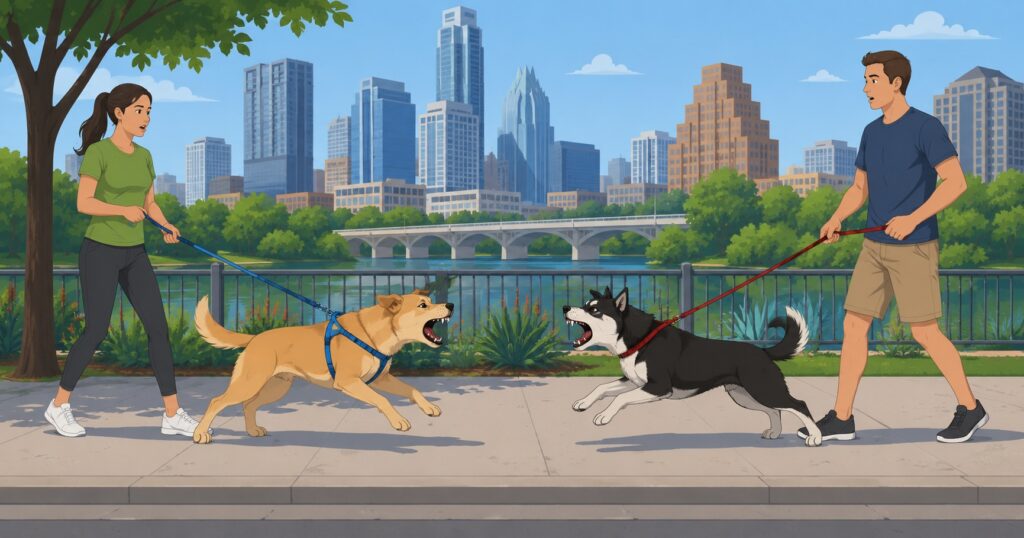
Lunging at passersby, snapping during walks, persistently barking at strangers, or charging at fences can all indicate escalating danger. These behaviors matter because they show repetition, and repetition signals predictability, not coincidence.
3. Prior warnings and complaints matter
You might hear about neighbors reporting the dog, or a delivery worker refusing to approach the home after a close call. Those moments matter. They help show the owner had notice and didn’t take steps to reduce the risk.
4. Courts evaluate patterns, not single events
Judges look at how the dog behaved over time and whether those behaviors created a foreseeable risk. A pattern of aggression carries far more weight than a single isolated moment.
How RMD Law Can Help Dog Bite Victims
After a dog attack, you don’t just deal with injuries. You deal with confusion, paperwork, and pressure from insurance companies that move fast to limit what they pay. Here, legal support matters.
1. Identify all potentially responsible parties early
A dog bite case rarely involves just one layer of responsibility. You may have a dog owner, a property owner, or even a caretaker involved. We at RMD Law will map out who had control, who failed to act, and where liability actually sits, so you don’t miss a key defendant.
2. Preserve critical evidence before it disappears
Security footage gets overwritten, and witnesses can forget details. Medical documentation takes time to compile, so early action protects the proof of your case. That includes videos from homes, businesses, or apartment complexes near the incident.
3. Build claims using multiple legal theories
Our attorneys may combine negligence, dangerous propensities, and leash ordinance violations to strengthen your position. This layered approach matters when insurers try to narrow liability.
4. Push back against insurance tactics
Insurance companies often move quickly with low offers or early-denial strategies. The goal is to close the claim before the full impact of your injuries becomes clear. Our legal representation helps keep the focus on long-term damages, not short-term payouts.
Beyond the Bite: What Really Counts
Texas dog bite cases rarely hinge on a single rule. They turn on details you might overlook at first—what the owner knew, how the dog behaved, and whether warning signs showed up before the incident under dog bite laws in Texas.
Small facts can shift fault: a prior complaint, repeated aggressive behavior, or a leash violation. Liability can also extend beyond the dog owner, depending on the property’s control and situation. Such details often carry more weight than the bite itself.
If you or a loved one has been injured in a dog bite incident, contact RMD Law today for a free consultation. A personal injury lawyer can evaluate your dog bite case and protect your right to compensation.
FAQs
What do Texas dog bite laws require?
Texas dog bite laws requires victims to prove the owner knew the animal was dangerous or failed to use reasonable care to prevent the attack. Proving local leash law violations or prior aggressive behavior establishes clear legal liability.
Does Texas follow a one-bite rule?
Yes, Texas follows a common-law “”one-bite rule,”” but it does not give dogs a free pass. Owners remain financially liable for a first attack if they acted negligently in handling or restraining the animal.
What counts as dangerous dog behavior?
Dangerous behavior includes growling, snapping, lunging at passersby, charging fences, or attacking other animals. Under Texas Health & Safety Code Chapter 822, prior animal control complaints establish clear owner knowledge.
Who is liable for a dog bite in Texas?
Liability falls primarily on the dog owner or temporary handler. Landlords, property management companies, or commercial property operators may also share financial liability if they knowingly permitted a dangerous dog on common premises.
What evidence helps a dog bite claim?
Crucial evidence includes high-resolution photos of puncture wounds, emergency room treatment records, animal control incident reports, eye-witness statements, and documentation showing local leash law violations.
Can you sue a dog owner for injuries?
Yes. You can file a civil lawsuit against a dog owner in Texas to recover full monetary damages under theories of strict liability, ordinary negligence, or negligence per se.
What damages can be recovered in Texas?
Dog attack victims can recover economic damages for emergency medical bills, reconstructive surgeries, and lost wages, alongside non-economic compensation for physical agony, mental anguish, severe trauma, and permanent scarring.

- Traumatic Brain Injury Long-Term Effects and How to Secure Your Settlement - October 20, 2026
- 2026 Updates to California E-Bike and Motorized Scooter Sidewalk Laws - October 15, 2026
- Map of Level 1 Trauma Centers in Northern California: Where to Go When Seconds Count - October 13, 2026