Key Takeaways
Dram shop laws in Texas can extend liability beyond the driver
- Texas dram shop laws may also hold bars and restaurants responsible when they over-serve visibly intoxicated drivers who later cause injuries. This can create an additional path to compensation when insurance is not enough.
Texas law requires proof of obvious intoxication and clear danger
- Under the Texas dram shop law, you must show the driver had visible signs of impairment that any reasonable server should have noticed. Casual drinking or hindsight suspicion is not enough.
Strong cases rely on layered, real-world evidence
- Witness accounts, surveillance footage, receipts, police reports, and expert analysis often work together to prove over-service and intoxication under the dram shop act Texas framework.
Timing matters because evidence disappears quickly
- Bars may overwrite footage or lose records within days, which makes early legal action critical to preserving proof under the Texas dram shop statute.
Safe Harbor defenses can be challenged with the right facts
- Even if a bar claims compliance, evidence of pressure to over-serve or ignored intoxication can weaken or defeat that defense entirely.
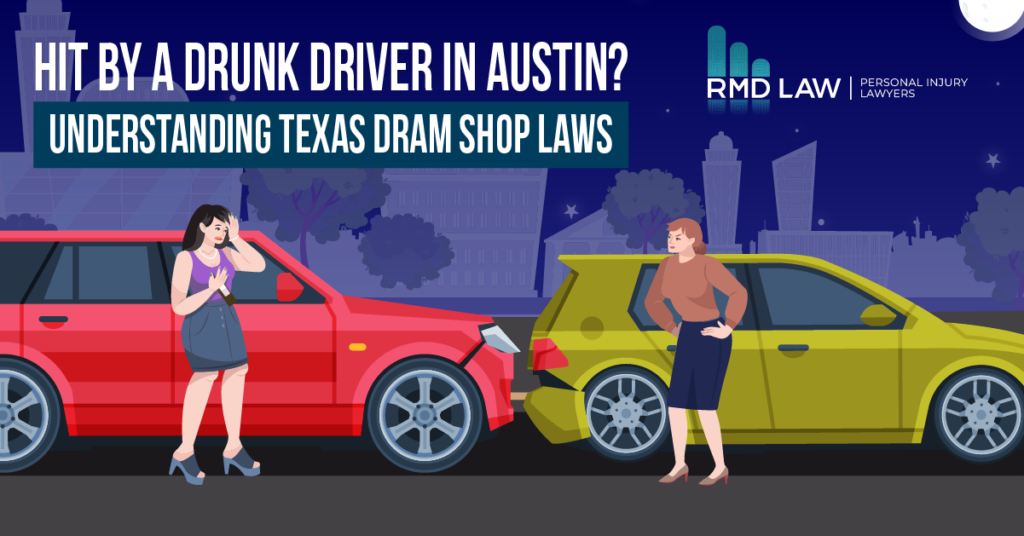
Austin’s nightlife doesn’t slow down very often. Bars stay crowded, drinks keep flowing, and rideshare pickups line the streets late into the night. When a drunk driving crash happens, it often traces back to those earlier hours inside an establishment that serves alcohol.
After an accident, you deal with the aftermath right away. Injuries, medical bills, missed work, and a driver who likely carries minimal insurance. That combination can leave you stuck with expenses you didn’t cause.
Texas law gives you another possible route. In some cases, responsibility extends beyond the driver to the bar or restaurant that over-served them under the Texas dram shop law. These claims fall under the Texas dram shop statute and can provide additional recovery when insurance falls short.
Here, we’ll explain what dram shop laws in Texas are, how liability works, how a car accident lawyer can help, and what you need to prove in to prevail in dram shop cases.
What is The Texas Dram Shop Act (TABC § 2.02)?
Under Texas Alcoholic Beverage Code § 2.02 or the Dram Shop Act in Texas, a licensed alcohol provider can share liability if they serve alcohol to someone who is already clearly intoxicated and involved in a crash. The law focuses on what the staff observed—or should have reasonably noticed—at the time of service, not just what happened later on the road.
The Texas dram shop law allows injured victims to hold bars, nightclubs, restaurants, and other licensed establishments accountable when their decision to keep serving alcohol contributes to a foreseeable crash. The law doesn’t punish businesses for normal alcohol sales. It targets situations where continued service crosses a safety line.
To bring a claim, you need to connect three things: the establishment served the driver, the driver presented visible signs of intoxication, and that service contributed to the crash. That last link matters. Texas courts look closely at causation, not just alcohol consumption.
These cases become especially important when the at-fault driver carries minimal insurance. Even a serious crash can leave you with unpaid medical bills. Dram shop laws create another path to recovery when insurance alone falls short.
In practice, these claims often turn into a question of awareness. What did the bartender see? What should they have noticed? The answer usually determines whether liability exists at all.
How to Prove Obvious Intoxication
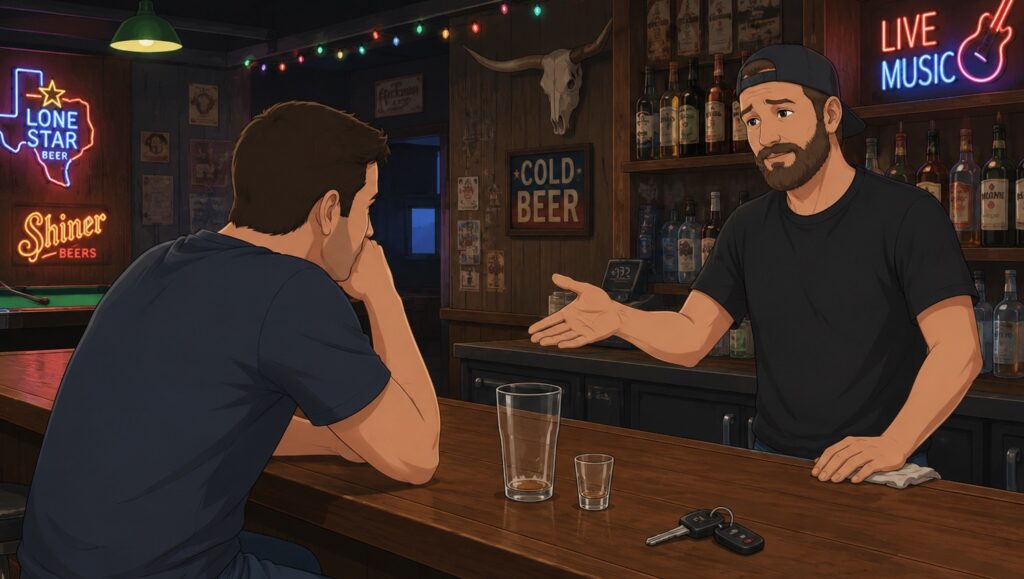
A Texas dram shop law claim hinges on what the bartender saw that night because establishments rarely admit to noticing clear signs of intoxication.
Legal standard explained in plain language
Under the Dram Shop Act of Texas, you must show the driver was “obviously intoxicated to the extent they presented a clear danger” when the alcohol was served. You’re not proving they drank. You’re proving their condition was visibly unsafe.
That standard is a high bar. Texas law expects proof of outward impairment, not speculation. The question is simple: Would a reasonable bartender have stopped serving them?
Types of evidence used to prove intoxication
You rarely win this with one piece of evidence. You must build layers.
- Witness testimony from patrons, staff, or bystanders
- Surveillance footage from inside the establishment
- Receipts and tab records showing drink timing and volume
- Police reports describing behavior after the crash
- BAC results, when available
- Expert testimony explaining alcohol effects based on consumption patterns
Behavioral indicators of obvious intoxication
Jurors often focus on what the person looked like in real time or what the staff could have seen. Common signs include:
- Slurred speech or confusion
- Stumbling, swaying, or poor balance
- Aggressive or disruptive behavior
- Continued alcohol orders despite clear impairment
Timeline reconstruction
You track when the last drink was served and connect it to when the crash happened. The timeline often shows whether intoxication escalated inside the bar or afterward.
Challenges and defenses from establishments
Bars usually deny visible intoxication. They may claim staff followed proper training or that records don’t show over-service. Sometimes surveillance footage is missing or incomplete, which can be a major issue in litigation.
Strategic insight
These cases can evolve quickly. Surveillance footage can disappear, and witnesses forget details quickly. Early investigation often decides how strong your Dram shop claim becomes. Once evidence is gone, it rarely returns in full.
Understanding The Safe Harbor Defense
After you build a dram shop claim, you’ll likely run into one of the most common defenses: Safe Harbor. It’s the argument bars and restaurants use to avoid liability under Texas dram shop laws, even when a crash clearly involves an intoxicated driver. This defense often becomes a major turning point in the case.
Safe Harbor comes from the Texas dram shop statute and can protect an alcohol-serving business if it meets specific legal conditions. The establishment usually argues it should not be responsible because it trained its staff and followed the required procedures. On paper, it sounds straightforward, but real-world facts often tell a different story.
Most businesses rely heavily on TABC certification as their primary defense. Employees must complete alcohol service training before serving drinks, and employers often point to that certification as proof of compliance. However, courts also examine how the business actually operated during service, not just training records.
To qualify for Safe Harbor protection, the employer must provide proper certification, not encourage over-service, and not commit knowing violations of alcohol laws. If evidence shows pressure to overserve or ignore intoxication, the defense weakens quickly. Dram shop laws cases often shift in the victim’s favor, depending on what the investigation uncovers.
How RMD Law Can Help Drunk Driving Victims
A drunk driving crash leaves you injured, overwhelmed by medical bills, and fighting with insurance adjusters over minimal policy limits. That confusion is exactly where legal support can change the course of your case under the Texas dram shop law.
1. Comprehensive case investigation
You start by identifying every possible source of liability, not just the driver. That includes bars, restaurants, or nightclubs that may have contributed under the Texas dram shop statute. We secure surveillance footage, witness statements, and transaction records immediately before they are permanently deleted.
2. Building a strong dram shop claim
Once you gather evidence, the focus shifts to proving liability. That means connecting visible intoxication to continued alcohol service and showing how it led to the crash. Experts may help explain impairment levels and reconstruct the timeline in a way that supports your claim under dram shop laws.
3. Handling insurance and negotiations
Insurance companies rarely volunteer fair compensation. You may deal with multiple insurers trying to shift blame or minimize payouts. Strong documentation helps push negotiations toward a settlement that reflects the full impact of your injuries.
4. Litigation readiness
If insurers refuse to act reasonably, the case moves toward litigation. That includes preparing evidence for trial and addressing defenses like Safe Harbor. We’ll build a strategy that anticipates how the other side will argue the case.
5. Client-centered approach
Throughout the process, you stay informed about what’s happening and why it matters. Legal teams typically work on a contingency basis, meaning you don’t pay upfront costs. That allows you to focus on recovery while the case moves forward.
Where Your Options Stand Now
A drunk driving crash in Austin may involve more than just the driver. Texas law allows you to explore additional liability under the Texas dram shop law and statute, especially when a bar or restaurant contributes to over-service. These claims often become key when insurance coverage falls short.
Success depends on evidence—what staff observed, how the driver behaved, and whether alcohol service continued despite clear warning signs. Under Dram Shop laws, timing and documentation often decide the outcome.
These cases move fast. Surveillance footage and witness details can disappear quickly, which makes early action important. A car accident lawyer can help you protect evidence, identify liable parties, and pursue full compensation.
If you are injured, contact RMD Law to review your case and understand your options.
FAQs
Texas dram shop laws allow injured victims to hold alcohol-serving businesses responsible if they serve someone who is already obviously intoxicated, and that intoxication leads to a crash. These claims often apply to bars, restaurants, and nightclubs.
Yes, under the Texas dram shop law, you may sue a bar or restaurant if it overserved a visibly intoxicated person who later caused your injuries. You must prove the link between over-service and the crash.
It means the person demonstrated clear, visible signs of impairment that a reasonable server should have noticed. This can include slurred speech, stumbling, aggressive behavior, or inability to control movement while being served alcohol.
Safe Harbor allows a business to avoid liability if its employees were properly trained, certified, and the employer did not encourage over-service. However, this defense can be challenged if evidence shows unsafe alcohol service practices.
In most cases, Texas personal injury claims, including dram shop cases, must be filed within two years of the accident. Acting early is important because evidence like surveillance footage may not be stored long-term.

- Reckless Driving in California: Punishment & Penalties - October 11, 2026
- California Law on the Total Loss of a Vehicle: 6 Steps of the Settlement Process - October 11, 2026
- 66 Fatal DUI Accidents: Fresno County Drunk-Driving Deaths Jumped 57% in a Single Year - October 9, 2026