Key Takeaways
- Navigate the complicated insurance waterfall
A rental collision triggers multiple layers of overlapping coverage. You must completely exhaust the at-fault motorist’s personal policy before accessing the agency’s supplemental liability funds. Understanding this strict financial hierarchy prevents adjusters from successfully passing the buck.
- Pierce the corporate liability shield
The Graves Amendment legally protects rental agencies from a customer’s careless driving. You can still hold the corporation directly accountable under very specific conditions. Proving the company ignored vital brake maintenance or knowingly rented out a dangerously defective vehicle shatters their federal immunity.
- Pursue fleeing out-of-state tourists
Vacationers boarding a flight home do not escape their financial obligations. You negotiate directly with their auto insurer regardless of the driver’s actual physical location. Powerful legal tools allow you to track uncooperative non-residents and force a binding resolution across state lines.
- Consult a San Diego car accident attorney
RMD Law aggressively dismantles the bureaucratic roadblocks erected by corporate claim departments. The firm identifies every single liable party and demands prompt answers from the decision-makers holding the checkbook. This targeted legal strategy secures maximum financial recovery when stubborn insurers refuse to cooperate.
Hit by a Rental? How to Establish Car Accident Liability in San Diego
You are driving through the Gaslamp Quarter when a lost tourist suddenly sideswipes your vehicle. You pull over and discover the at-fault motorist is driving a rented SUV. A standard collision quickly transforms into a bureaucratic nightmare. You suddenly find yourself trapped in a frustrating loop of automated phone systems. Corporate adjusters, the rental agency, and the driver all point fingers. Nobody wants to write a check.
Getting compensation after a rental car accident requires navigating a complicated hierarchy of overlapping insurance policies. This article breaks down the coverage waterfall, determining exactly who pays for the damages. It explores federal rules like the Graves Amendment and outlines your exact legal options when an out-of-state driver disappears back home.
Why Rental Car Accidents in San Diego Are So Confusing
San Diego attracts millions of visitors annually. Tourists flood the local highways all year long. Visitors unfamiliar with the confusing layout of the I-8 and 163 interchange often make sudden, erratic lane changes.
This constant influx of travelers guarantees a high volume of rented vehicles on the road. Handling a collision involving a rental car in San Diego instantly adds friction because you rarely deal with just two local drivers.
A standard crash usually features two drivers and two insurance providers. A rental collision drags several corporate entities into the aftermath:
- The at-fault driver’s personal auto insurer
- The rental agency’s corporate liability provider
- The driver’s credit card company (often providing conditional coverage)
Each entity aggressively protects its own bottom line. This crowded field of corporate players creates absolute chaos for victims. Adjusters leverage the confusion to delay payouts. The driver’s personal insurance might insist the rental agency holds primary responsibility.
The rental company quickly issues a denial letter citing the renter’s personal negligence. Hostile claim departments bounce you back and forth without offering any real answers. Delay tactics force you into a frustrating holding pattern while your medical bills pile up.
The Insurance Waterfall: Who Pays First, Second, and Third
Understanding who cuts the check requires following the money down a tiered system. Adjusters look at coverage like a cascading waterfall. When one policy reaches its maximum payout limit, the financial responsibility spills over into the next available tier. Pinpointing exactly where rental car accident liability lands means checking these policies in a very specific order.
The Driver’s Personal Auto Insurance
The at-fault motorist’s personal policy stands at the top of the waterfall. Liability coverage typically follows the driver regardless of the vehicle they operate. This policy serves as the primary source of compensation for your medical bills and vehicle repairs. Problems quickly surface when a tourist carries a bare-minimum policy from their home state. A severe crash easily drains those low limits dry.
Supplemental Liability Insurance (SLI)
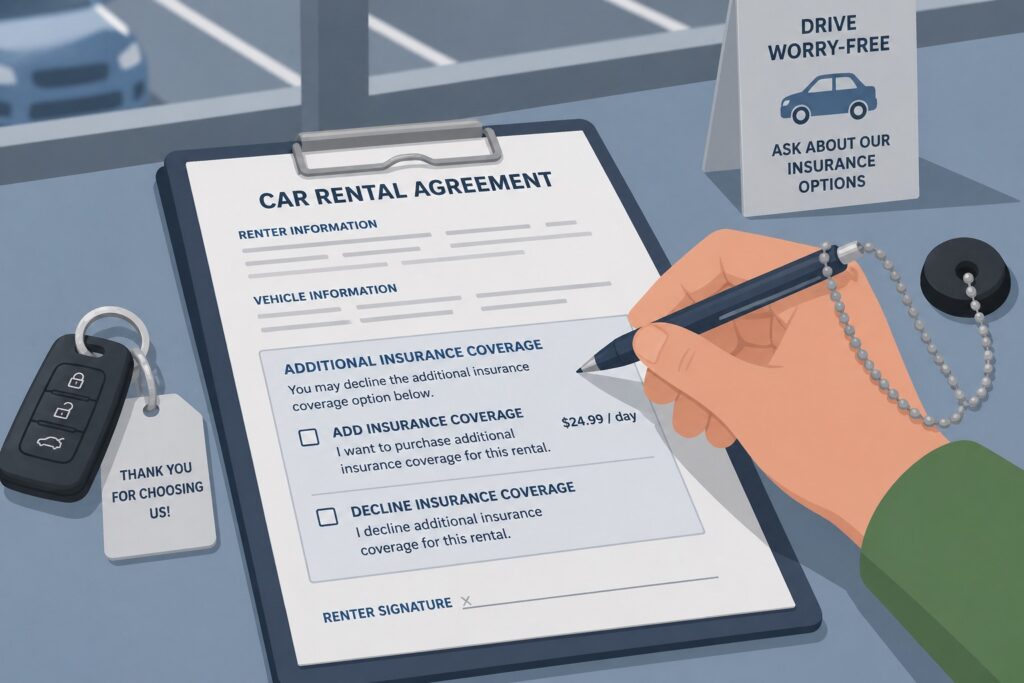
Rental agencies always prompt customers to purchase extra coverage at the counter. Supplemental liability insurance activates once the driver’s personal policy exhausts its funds. If the tourist bought this protection, it provides a massive second layer of financial recovery. SLI policies frequently carry limits up to one million dollars. Accessing this money depends entirely on whether the renter checked the right box during checkout.
Credit Card Rental Coverage
Travelers often decline the rental counter insurance because premium credit cards offer built-in perks. Victims routinely misunderstand this specific layer of protection. Credit card benefits almost exclusively cover collision damage to the rental car itself. They rarely offer liability protection for your bodily injuries or damage to your personal vehicle. Seeking a medical payout from the driver’s credit card company usually results in a swift denial.
Uninsured/Underinsured Motorist (UM/UIM) Coverage
Sometimes the waterfall runs completely dry. The tourist might lack personal insurance and decline all the rental agency’s add-ons. Your own uninsured or underinsured motorist coverage acts as a vital safety net. Filing a UM/UIM claim forces your own auto insurer to step into the shoes of the negligent driver. This coverage bridges the financial gap when the responsible party fails to carry adequate protection.
Understanding Rental Car Accident Liability in California
California operates on a strict fault-based system. The driver who causes the crash pays the bill.
Negligence determines fault
Operating a rented vehicle offers zero legal immunity. A tourist texting while merging holds the same responsibility as a local driving a personal sedan. Securing a payout requires proving the other driver acted carelessly or recklessly behind the wheel.
Comparative fault rules may reduce compensation
California enforces pure comparative negligence. This legal doctrine divides blame among everyone involved in the crash. If an adjuster successfully argues that your slight speeding contributed 20% to the collision, your final settlement drops by 20%. Corporate insurers actively hunt for reasons to shift blame and shrink your check.
Evidence is critical in proving liability
Protecting your rental car accident liability claim requires hard proof. You need a formal police report to establish official facts. Snap clear photographs of the vehicle damage, skid marks, and street signs. Collect independent witness statements immediately before bystanders forget the details.
The Graves Amendment: Why Rental Companies Usually Aren’t Liable
Before 2005, personal injury attorneys routinely sued rental agencies simply because the corporation owned the vehicle involved in a crash. The Graves Amendment changed the rules completely. This federal statute acts as an ironclad shield against vicarious liability. A rental company is no longer automatically responsible for the negligent actions of the person driving their property.
Exceptions: When a Rental Company Can Still Be Held Responsible
The federal shield has cracks. You can still hold major corporations accountable under very specific circumstances. The law protects agencies from reckless drivers, but it never excuses a company’s own dangerous business practices.
Negligent maintenance
Rental fleets endure brutal wear and tear. Agencies must keep these vehicles reasonably safe for public roads. A massive rental car accident caused by severely bald tires or failing brake pads shifts the liability directly onto the corporation. Ignoring basic mechanical upkeep strips away their federal protection.
Failure to inspect or repair vehicles
Agencies establish strict mileage intervals for routine service. Sometimes managers bypass these crucial inspections to keep cars on the lot to earn daily rates. Skipping mandatory safety checks or ignoring dashboard warning lights creates direct liability. A documented history of ignored service bulletins provides strong grounds for a lawsuit against the agency.
Renting out unsafe vehicles
Handing the keys to a visibly intoxicated customer creates an immediate legal hazard. Renting out a car with an active, unresolved manufacturer recall carries the same risk. Knowingly putting a dangerous vehicle onto local streets exposes the rental company to severe financial consequences.
What If the At-Fault Driver Is a Tourist or From Out of State?
A local collision brings enough headaches. Toss an out-of-state resident into the mix, and the complexity multiplies instantly. Vacationers eventually pack up and fly home. You remain stuck dealing with the messy aftermath. Pursuing a non-resident introduces several frustrating roadblocks.
Out-of-state insurance complications
Every state dictates its own minimum auto insurance requirements. California mandates baseline liability limits of 30/60/15. A tourist from another state might carry a severely underfunded policy designed for much lower legal thresholds. Those foreign limits often fail to cover a single emergency room visit in San Diego. Navigating the clash between out-of-state policy caps and expensive local medical bills requires careful maneuvering.
Jurisdiction and legal challenges
Filing a claim across state lines slows the entire recovery process to a crawl. Conflicting legal jurisdictions complicate simple tasks like serving court papers or enforcing subpoenas. Insurance adjusters actively exploit these geographical hurdles. They intentionally stretch out response times, knowing the physical distance makes aggressive follow-ups harder for you.
Difficulty tracking the driver
Tourists routinely disappear the moment their vacation ends. Phone numbers go straight to voicemail. Emails sit unread. Locating a non-local driver who suddenly stops cooperating stalls your progress completely. You cannot easily negotiate a settlement or secure compensation from a ghost.
What Happens If the Driver Leaves the State or Country?
An international tourist causing a collision and immediately boarding a flight out of LAX sounds like a nightmare scenario. You might assume your chances of securing a settlement vanish the second their plane takes off. Fortunately, the legal system anticipates fleeing motorists.
Claims can still proceed through insurance
Physical absence does not erase financial responsibility. A driver’s personal policy remains firmly tethered to the local crash. You negotiate directly with the corporate adjuster regardless of where the actual driver sleeps at night. The claims process moves forward even if the tourist ignores every phone call.
Uninsured motorist coverage may apply
Sometimes a foreign traveler disappears completely. They might carry an unrecognized overseas policy that refuses to pay American medical bills. Your own uninsured motorist coverage steps in to save the claim. You essentially file the rental car accident claim against your own insurance provider, bypassing the missing driver entirely.
Legal strategies to pursue absent defendants
Attorneys utilize powerful tools to track down uncooperative defendants. Skip tracing databases locate updated addresses across state lines. California maintains specific long-arm statutes allowing local courts to assert jurisdiction over out-of-state drivers who cause harm within state lines. If a foreign tourist ignores the demands, legal professionals can escalate to international service of process to force a binding resolution.
What to Do Immediately After a Rental Car Accident in San Diego
A chaotic crash scene easily clouds your judgment. Taking immediate, strategic action protects your legal claim and prevents crucial compensation from slipping away completely.
1. Call the police and document the scene
Dial 911 immediately. An official police report establishes a baseline of undeniable facts that adjusters cannot easily dispute. While waiting for the officers, pull out your smartphone. Capture multiple wide-angle shots of the entire intersection. Zoom in on the vehicle damage, shattered glass, and fresh skid marks.
2. Collect driver and rental vehicle information
Gather the standard personal details first. Secure the driver’s name, phone number, license, and personal insurance card. Next, you must extract the specific rental data. Ask the driver to show you their rental agreement. Write down the reservation number, the corporate agency name, and the vehicle’s license plate.
3. Notify insurance providers promptly
Call your own auto insurance company right away to report the collision. Strict reporting deadlines dictate almost all standard policies. Delaying this initial notification hands corporate adjusters an incredibly easy excuse to deny your coverage later.
4. Seek medical attention immediately
Adrenaline masks severe injuries. Go straight to an emergency room or urgent care clinic after leaving the scene. A prompt medical evaluation generates official health records linking your physical pain directly to the crash. Unexplained gaps in medical treatment let aggressive defense attorneys argue you suffered those injuries elsewhere.
How a Car Accident Lawyer Can Untangle Rental Car Liability
Battling corporate claim departments alone usually ends in frustration. A skilled attorney dismantles the bureaucratic roadblocks blocking your financial recovery.
1. Identify all liable parties and insurance layers
Lawyers dig straight through the complicated insurance waterfall. They force the driver, the rental agency, and the credit card company to reveal their exact policy limits. Finding every hidden dollar prevents you from accepting an inadequate settlement.
2. Handle rental companies and corporate insurers
Corporate entities utilize aggressive delay tactics. They want you to give up. Legal representation stops the endless runaround completely. Attorneys bypass the low-level phone operators and demand direct answers from the decision-makers holding the checkbook.
3. Track down out-of-state or foreign drivers
Vacationers disappear fast. Lawyers utilize specialized databases to locate uncooperative tourists anywhere across the globe. They issue subpoenas and initiate lawsuits across state lines. This aggressive tracking keeps the pressure locked firmly on fleeing defendants.
4. Negotiate with multiple insurers simultaneously
Juggling three different adjusters creates absolute chaos. A legal team centralizes all communication. They field every call and respond to every letter. This structured approach forces the insurance companies to actually distribute the financial responsibility rather than point fingers at each other.
5. Maximize compensation through a clear liability strategy
Organized legal claims command higher payouts. Attorneys compile police reports, expert medical assessments, and mechanical inspection records into a concrete demand package. Building an undeniable case neutralizes comparative fault arguments and secures the maximum financial recovery available.
Take Control of Your Claim
Getting hit by a rental vehicle traps you in an absolute insurance nightmare. Surviving this corporate maze requires understanding exactly how the coverage waterfall flows. You must know how to navigate the Graves Amendment and track down fleeing tourists to secure your settlement.
Never let aggressive adjusters use bureaucratic confusion to deny your rightful compensation. Partnering with a skilled car accident lawyer in San Diego forces these massive companies to take your injuries seriously. The legal team at RMD Law knows exactly how to untangle these complex liability webs.
When stubborn insurers point fingers and refuse to cooperate, demand justice.
Contact RMD Law to navigate your rental car accident claim and secure your compensation.
FAQs
The at-fault driver’s personal auto insurance pays first. If their limits fall short, the financial responsibility shifts to the rental agency’s supplemental liability coverage, provided the driver purchased it. If all else fails, your own uninsured motorist policy bridges the gap.
Federal law usually shields rental agencies from lawsuits regarding a customer’s reckless driving. You can still sue the corporation directly if they knowingly provided a defective vehicle. Ignoring mandatory mechanical upkeep completely strips away their federal immunity.
You pursue compensation directly through the tourist’s personal insurance provider, even after they fly home. Their physical absence never erases their financial responsibility. If a foreign driver disappears completely, lawyers utilize skip tracing databases to enforce accountability.
Call 911 immediately to secure an official police report. You must collect the negligent driver’s personal insurance details and their specific corporate rental agreement number. Seek prompt medical attention to formally link your physical injuries directly to the collision.
California enforces pure comparative negligence. Liability depends entirely on proving which driver acted carelessly behind the wheel. If corporate adjusters successfully blame you for a specific portion of the crash, your final financial settlement drops by that exact percentage.

- School Zone Pedestrian Accidents in California: Who’s Liable? - September 17, 2026
- Two Roads, 76 Deaths: New Data On Fresno County’s Most Dangerous Roads - September 15, 2026
- Why Wrong-Way Crashes Are Increasing in Orange County at Night - September 10, 2026