
Key Takeaways
- A gap in medical treatment doesn’t just look bad to an adjuster, it gets scored by software before a human ever forms an opinion of your case.
- Two weeks is roughly where several major claims platforms stop reading a gap as normal and start reading it as a red flag.
- The fix isn’t “never have a gap.” Life gets in the way of appointments. The fix is getting the reason for the gap into your medical record before the software ever sees the file.
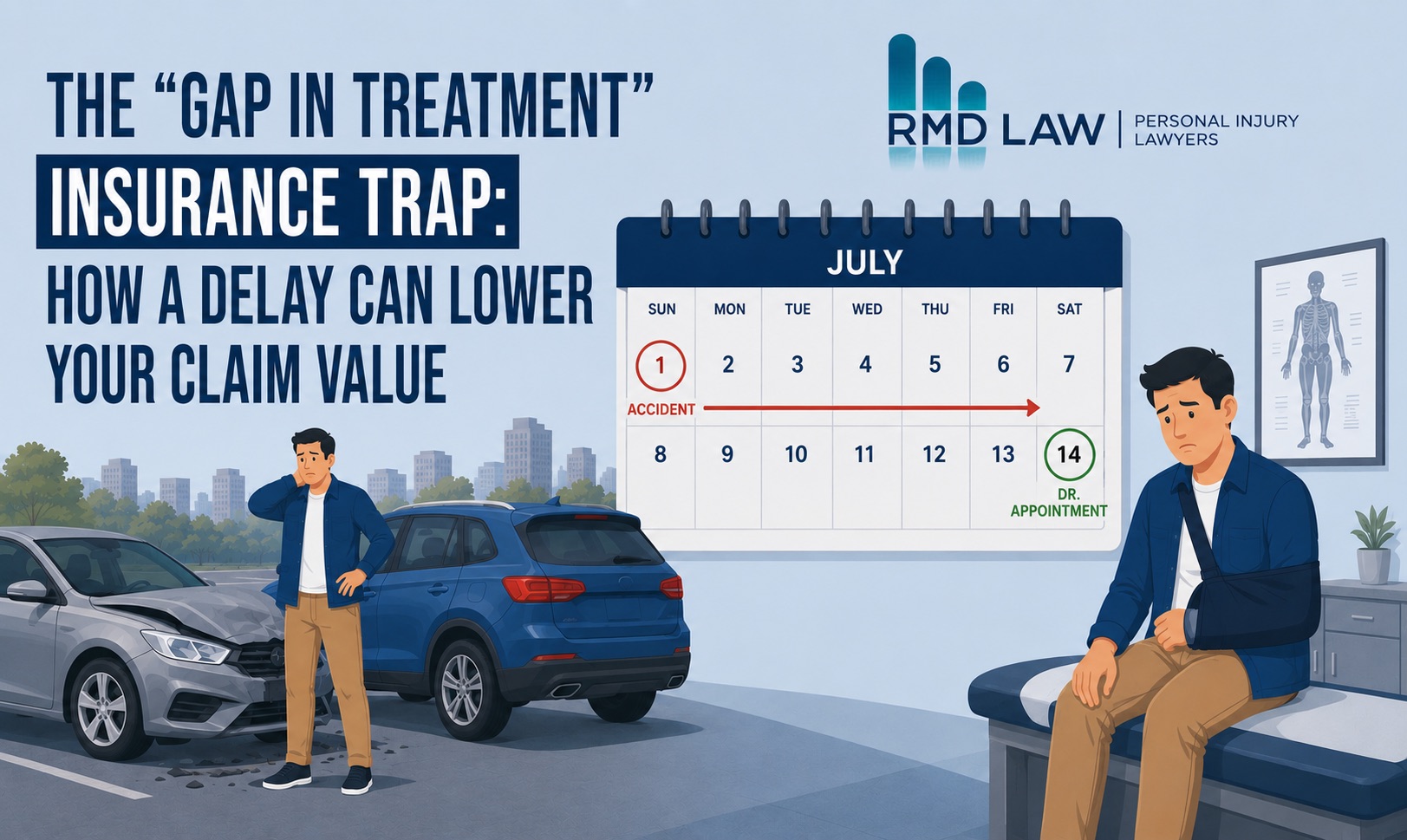
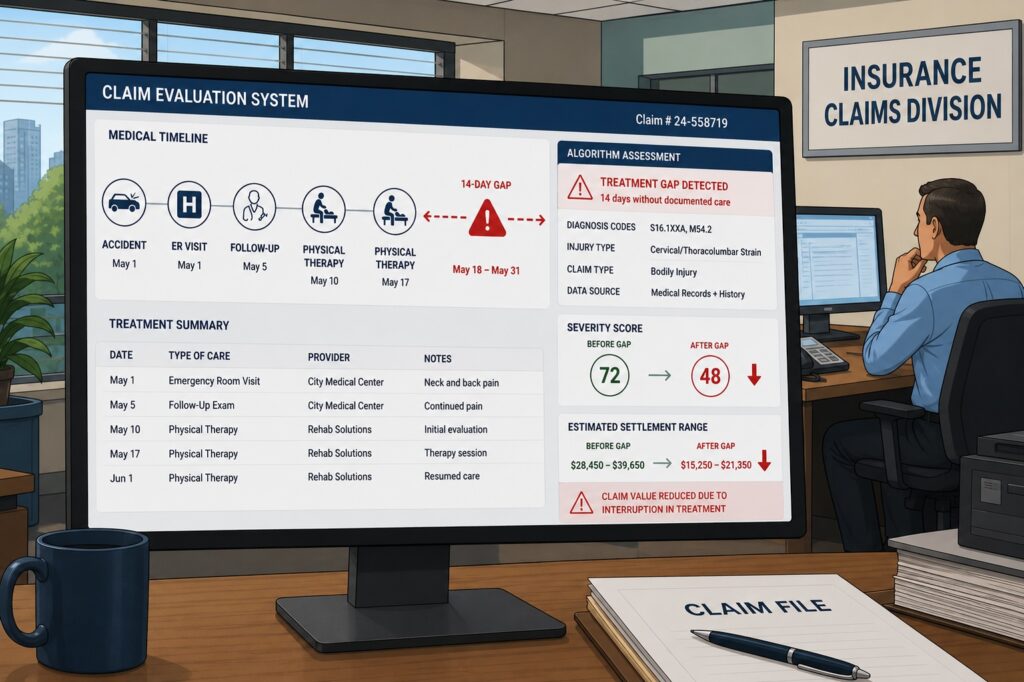
Somewhere inside your insurance company’s system sits a claim number, a set of diagnosis codes, and a row of treatment dates. Two of those dates have a fourteen day gap in medical treatment between them. That space is now a variable in a settlement calculation, and a piece of software is about to punish you for it before an adjuster even reads your name.
This is the part nobody explains when they tell you to see a doctor after a personal injury claim. The advice is correct. The reason is often misunderstood. You’re not just documenting your injuries for an insurance adjuster. You’re creating the medical timeline that insurance claim software uses to value your claim.
What Is Colossus and How Does It Value Your Injury Claim?
Colossus is a claims valuation software built by Computer Sciences Corporation, now operating under DXC Technology. Insurance carriers license Colossus and competing software to convert bodily injury claims into standardized financial payouts. If your carrier isn’t Allstate, that doesn’t mean you’re clear of this. It means you’re likely dealing with a different version of the same system.
How the Software Values Your Injury:
- Input: The adjuster enters your ICD-10 diagnosis codes, procedure codes, treatment types, and exact dates of service.
- Scoring: The software cross-references these entries against thousands of historical injury profiles, assigning “Severity Points” and calculating economic damages (“specials”).
- Output: The system generates a narrow settlement range. Insurance adjusters are trained to stay inside that number.
Regulators have taken a formal look at this before. The National Association of Insurance Commissioners has conducted multi-state examinations into claims software, uncovering systematic tuning designed to artificially suppress soft-tissue injury valuations.
Is a Low Settlement Offer Illegal in California?
Under California’s Fair Claims Settlement Practices Regulations, specifically Section 2695.7(g), insurers are prohibited from making unreasonably low settlement offers as part of a pattern or practice. If claims software is used in a way that systematically produces unreasonably low settlement offers, it may raise concerns under this regulation. The rule is intended to prevent insurers from engaging in patterns or practices that unfairly undervalue valid claims.
What Counts as a Gap in Treatment?
There are three places a gap can show up in your recovery, and the software evaluates all three separately.
- Initial delay: Waiting days or weeks after the accident before seeking medical care.
- Intermittent gap: Missing appointments or pausing treatment before it is complete.
- Premature end to treatment: Stopping care before your doctor formally discharges you, then returning weeks or months later.
No carrier publishes the exact day count that triggers a penalty. From our experience, we consistently see that shorter gaps are less likely to affect claim value, and the strongest medical record is one with continuous, well-documented treatment.
How Does a Gap in Medical Treatment Lower Your Settlement?
The software treats a treatment gap as a stand-in for injury severity. No continuous record of treatment reads as no continuous injury. That assumption is buried in the code, and it’s wrong more often than the software’s output suggests.
Your total medical billing, what insurers call “specials,” feeds the pain and suffering multiplier that increases your settlement number. A gap doesn’t just look bad on paper, it truncates your specials by cutting your treatment record short in the software’s eyes, even if you were still hurting the entire time.
And the penalty isn’t a single event. It’s cumulative across the file. The pause between your ER visit and your first follow-up gets scored. A missed physical therapy session two months later gets scored. A stall after your insurance company drags its feet on an authorization gets scored, even though that delay was never your fault. Each one is a separate data point working against you.
There’s no published statute that says a fourteen day gap costs you exactly this many dollars. However, our attorneys who negotiate these cases consistently observe a clear pattern: once an unexplained treatment gap approaches or exceeds two weeks, settlement offers often become more difficult to negotiate because insurers may question the severity of the injury, whether the accident caused it, or whether continued treatment was necessary.
Why Does Delaying Treatment Hurt Your Claim More Than It Seems?
A human adjuster can be talked into sympathy. You can explain that you couldn’t get childcare, that you were scared of what an MRI might show, that you were trying to push through the pain because you had bills to pay and couldn’t miss more work. A person can weigh that.
Software has no field for it. There’s no input for “patient is tough” or “patient has a good reason.” There’s a date, and then there’s the next date, and the space between them gets read one way regardless of why it’s there.
Picture two patients with the identical injury. One shows up to every appointment on schedule. The other, just as hurt, skips two sessions because work wouldn’t let up. The software doesn’t know the second patient’s pain was constant. It only knows the chart went quiet, and it prices the claim accordingly.
How Do You Close a Gap in Treatment After It’s Already Happened?
Most people reading this already have a gap in their file. That’s fixed less often than it should be, and it’s fixable more often than people assume.
The single most useful step is getting the reason for the gap written into the medical record itself, not just explained to your attorney after the fact. A financial barrier that kept you from a specialist. Childcare that fell through on the day of a follow-up. A referral that sat in a backlog for three weeks through no fault of your own. Delayed symptom onset, which is common with soft tissue injuries that don’t announce themselves until days after impact. All of these are legitimate, and all of them change how the software reads the exact same gap in your file, but only if they show up in your provider’s notes.
A conversation with your lawyer doesn’t touch the algorithm. A line in your chart does.
This is where a personal injury attorney’s job gets specific instead of general. It isn’t just showing up once your case reaches negotiation. It’s building the record the software is going to score, before the adjuster ever opens the file. Getting the timeline of a personal injury case right from an early stage is part of what determines whether that record works for you or against you months later.
How RMD Law Can Help
At RMD Law, we negotiate against these systems with a working knowledge of which claims platform a given carrier is likely running. We build the medical narrative early, while there’s still time to close a gap in the record instead of explaining it away after the fact. And when a first offer comes back low because a program generated it instead of a person evaluating your injury, we don’t let that number stand as the final word.
If a gap in medical treatment already exists in your file and you’re not sure what it’s done to your claim, a free case evaluation is the fastest way to find out.
FAQs
No. Carriers aren’t required to disclose which claims valuation program generated your number, and adjusters are trained to present that number as their own assessment. An offer that arrives fast and low relative to your medical bills is a more reliable signal than any disclosure you’ll get directly from the carrier.
Not in the same way. During negotiations, a gap gets scored automatically with no room for context. At trial, a jury hears the actual reason behind the gap and can weigh it the way a person would, which is part of why some claims that stall during negotiation move forward once a lawsuit is filed.
No. Continuing appointments past what your provider recommends can look like padding your bill rather than documenting a genuine injury, which creates a different problem for your claim. The better move is finishing the treatment plan your provider actually sets and scheduling your next visit before you’re fully discharged, not manufacturing appointments you don’t need.
It can, especially if there’s a lapse in care while you find a new provider or wait on a referral. The fix is the same one that applies to any gap: get the reason for the switch, whether that’s an insurance network change or a specialist referral, documented in your new provider’s intake notes.
In some cases, yes. A long enough gap gives a carrier an opening to argue that a later injury or a separate incident caused your symptoms, not the original accident. That shifts the dispute from valuation to causation, which is a harder position to fight without medical documentation connecting the two periods of treatment.

- Why Wrong-Way Crashes Are Increasing in Orange County at Night - September 10, 2026
- 2025 San Bernardino County Car Crash Data: Why Some Cities Cut Rates by 66% While Others Spiked 500% - September 8, 2026
- The Dangers of Early Settlement: Why Insurers Rush California Wrongful Death Claims - September 3, 2026