Key Takeaways
Austin ranks #2 among Texas cities for per-capita traffic fatalities.
- This shows how often you face serious crash risks per trip, not just total numbers.
Speeding contributes to over 25% of local crashes.
- Higher speeds reduce reaction time and increase impact severity on Austin roads.
Most fatal crashes occur on state-controlled highways.
- Major routes like I-35 and US-183 concentrate high-speed collision risk.
Drunk driving accounts for nearly 28% of fatal crashes.
- Impaired judgment leads to delayed reactions and life-threatening mistakes.
Distracted driving contributes to about 12.9% of fatal collisions.
- Even brief attention loss can trigger chain-reaction crashes in traffic.
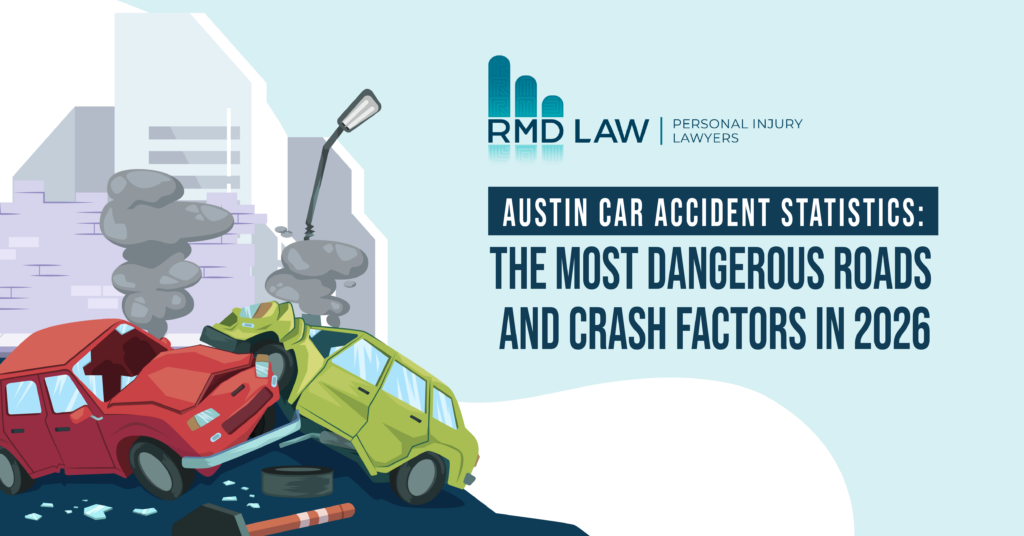
Austin keeps growing, but its roads haven’t kept pace. Every day, drivers squeeze through heavy Austin traffic on I-35, US-183, and SH 130 while construction zones, slowdowns, and lane changes raise the risk of a serious crash. Recent TxDOT and Vision Zero data show Austin now ranks among the deadliest major cities in Texas for traffic fatalities per capita.
Speed continues to play a major role, especially during late-night and high-volume driving hours. Distracted and impaired driving remain a persistent problem across Travis County. Those numbers reflect real people, real injuries, and real financial fallout from an Austin car accident.
This guide breaks down where fatal crashes happen most often, what causes them, and how current Austin driving and road conditions continue to shape crash risk in 2026.

Why Austin Ranks #2 Among Texas’ Most Dangerous Cities
You see it every day when you drive through Austin traffic. The stop-and-go rhythm creates space for mistakes, and Austin has plenty of them recorded in crash data. Austin’s population keeps climbing, and the road network hasn’t kept pace. More residents mean more daily trips, merging conflicts, and split-second decisions across already stressed corridors.
1. Per-capita risk tells a different story
Recent data show Austin sitting near the top of the Texas major cities for per-capita traffic fatalities and serious injuries, at roughly 37.9 deaths per 100,000 residents. That ranking reflects how many crashes happen and how often residents face risk each time they’re behind the wheel.
2. Speeding drives a large share of crashes
Speed plays a role in Austin’s crash profile, accounting for over 25.7% of crashes. It mostly happens on wide stretches where drivers treat open gaps as permission to push limits.
3. Congestion fuels aggressive driving
Heavy traffic and challenging Austin driving conditions create constant, measurable pressure on commuters, with congestion levels rising to 40.5% in early 2026. That environment doesn’t just slow you down; it also increases the risk of misjudgment.
4. Speed escalates crash severity
Speed not only increases crash likelihood but also changes outcomes, contributing to roughly one in four (24%–25.7%) of all local fatal traffic accidents. A moderate-speed impact may leave you walking away, but a higher-speed collision can lead to catastrophic injuries.
5. Road patterns set the stage
Austin struggles with congestion that concentrates risk along specific corridors, especially highways, where speed, volume, and roadway design intersect.
The “State Road Trap”: Why Austin’s Highways Carry Most Fatal Crashes
Where you drive in Austin changes the risk profile, especially once you move onto high-speed state highways that carry the most serious crashes.
1. Highway control shapes crash patterns
Under Austin road conditions, you don’t always notice who controls the pavement. Some roads fall under TxDOT; others sit under city control. State highways like I-35, US-183, and SH 130 carry heavy commuter and freight traffic. Local streets handle shorter, slower trips.
When crashes happen, that difference in control often affects how quickly investigations move and how liability gets sorted out.
2. Fatal crashes cluster on major corridors
Data from TxDOT shows a striking pattern: roughly 65%–75% of fatal crashes in Austin occur on state-owned highways, usually on high-speed stretches where traffic never fully settles, even during off-peak hours.
On I-35, for example, vehicles shift constantly between lanes to avoid congestion. On US-183, long merges and exits create repeated conflict points. SH 130 adds speed into the mix, where higher limits increase the force behind every impact.
3. Road design creates constant risk points
These highways are not built for short merge lanes, sudden exits, and tight weaving zones. One small hesitation can force a chain reaction. Under Austin driving conditions, the mix of speed and structure doesn’t leave much margin for error. You don’t get time to correct mistakes when everyone around you moves at highway speed.
4. Growth strains older infrastructure
Austin’s expansion pushed more traffic onto roads that already carried near-capacity loads. That strain shows up in stop-and-go congestion, unpredictable merging, and frustrated drivers making aggressive moves to stay on schedule. More cars, limited space, and high-speed corridors create the exact conditions in which serious crashes often occur.
5. Driver behavior closes the gap
Even with infrastructure challenges, most crashes still come down to behavior in the moment. Speed choice, attention, and timing decide what happens next. That leads directly into the human factors behind Austin’s most dangerous crashes.
The “Big Three” Crash Factors in Travis County
These crash patterns don’t just show up on spreadsheets; they occur when you drive Austin’s busiest corridors, where one bad decision can escalate in seconds. Here are the core behaviors behind most serious collisions in Travis County.
1. Drunk driving leads fatal crash outcomes
You don’t need perfect conditions for a crash, just one impaired driver. In Travis County, drunk driving accounts for nearly 28% of fatal crashes. Austin traffic reports tie these to late-night travel and weekend congestion.
Alcohol slows reaction time and narrows judgment. It can manifest as delayed braking, drifting between lanes, or sudden lane changes without checking for space. On busy roads like I-35 or Riverside Drive, those delays can turn into high-impact collisions.
2. Distracted driving creates a silent danger
Distracted driving sits behind, accounting for about 12.9% of fatal crashes. A driver glances at a phone, adjusts navigation, or looks away for a second longer than they should. In Austin car accident cases, that split-second distraction often happens in heavy traffic where spacing already feels tight. One missed brake light can set off a chain reaction.
You also see distractions inside the vehicle. Passengers, food, and multitasking all pull attention away from the road.
3. High-speed intersection crashes drive severity
High-speed T-bone collisions occur when drivers misjudge timing or run red lights at intersections. On wide intersections, visibility feels open, but reaction time stays limited. On roads with faster flow, a driver entering late or turning aggressively can hit cross traffic at full speed. Travis County data shows this angle of impact causes the most severe injuries.
How a Car Accident Lawyer Can Help
After a serious crash, evidence, insurance claims, and liability questions all start moving at the same time, each affecting the outcome of your case.
1. Investigates crash evidence and causation
Austin car accident cases start with facts, not assumptions. We review police reports, crash reconstruction data, and roadway conditions tied to Austin road conditions to help you understand how the collision unfolded and how insurance companies frame it.
2. Manages insurance disputes and negotiations
Insurance carriers move fast to limit payouts. You may deal with multiple adjusters, each trying to shift blame or downplay injuries. We step in to push back on those tactics and keep negotiations grounded in documented evidence instead of speculation.
3. Identifies all potentially liable parties
Not every crash involves only two drivers. Under Austin driving conditions, you may face collisions involving rideshare drivers, commercial vehicles, or multiple cars. We identify every potentially responsible party, so you don’t miss recovery sources that could matter later.
4. Prepares cases for litigation when needed
Some cases don’t settle fairly. When that happens, your case moves toward court. We prepare evidence, organize expert testimony, and build a timeline that shows how the crash occurred and who bears responsibility.
5. Supports clients throughout the legal process
You stay informed at every stage. We explain what happens next, what decisions matter, and what deadlines you face. Most personal injury cases also run on contingency, so you don’t pay upfront fees while your case moves forward.
Where Austin Crash Risk Stands in 2026
Austin crash data shows a clear pattern. Speeding and impairment drive many severe and fatal collisions, especially on congested corridors where traffic moves fast and unpredictably. State highways like I-35 and US-183 see a large share of these crashes.
These conditions affect liability and recovery. More than one party may share responsibility, and early evidence often determines the strength of the case. A car accident lawyer can help you sort liability, deal with insurers, and protect your claim.
Contact RMD Law for a 100% free case evaluation to understand your options after a serious crash in Austin.
FAQs
Most Austin car accidents are due to speeding, distracted driving, and impaired driving. These behaviors reduce reaction time and increase the likelihood and severity of crashes, especially on high-traffic corridors like I-35 and US-183.
Austin highways carry heavy commuter and freight traffic, which increases speed differentials and the number of lane changes. Roads like I-35 and SH 130 also feature tight merges and frequent exits.
Speeding reduces a driver’s ability to react in time and increases the force of impact during a crash.
Distracted driving takes attention away from the road for even a few seconds. In Austin traffic, that’s enough to cause rear-end, intersection, or multi-vehicle collisions.
Most fatal crashes in Austin occur during high-traffic periods, especially late nights and weekends. These times often involve a mix of speeding, impaired driving, and reduced driver awareness.
Anyone traveling on major highways or busy intersections faces an elevated risk, especially commuters and nighttime drivers, due to high traffic combined with risky behavior.

- School Zone Pedestrian Accidents in California: Who’s Liable? - September 17, 2026
- Two Roads, 76 Deaths: New Data On Fresno County’s Most Dangerous Roads - September 15, 2026
- Why Wrong-Way Crashes Are Increasing in Orange County at Night - September 10, 2026