Key Takeaways
MoPac accident rear-end crashes often spike during Austin rush hour because traffic packs tightly, speeds shift without warning, and drivers have only seconds to respond.
- Even a brief delay in braking can trigger a chain-reaction impact in dense traffic.
Stop-and-go traffic increases the risk of rear-end collisions when drivers cannot maintain a safe following distance.
- Sudden braking in congested lanes often triggers chain-reaction collisions.
Express lane transitions and merging traffic create conflict points that disrupt steady flow.
- Drivers entering or exiting lanes can force unexpected braking from surrounding vehicles.
Liability in a MoPac accident rear-end crash may involve more than the driver in the back.
- Chain-reaction impacts and unsafe merges can shift or share fault among multiple drivers.
Insurance companies closely review timing, spacing, and driver behavior after a crash.
- Early statements and delays in reporting can affect how fault is evaluated.
Prompt medical care and documentation help protect both health and injury claims.
- Early records link injuries directly to the crash and strengthen compensation cases.
Why MoPac Expressway Sees So Many Rear-End Accidents During Austin Rush Hour
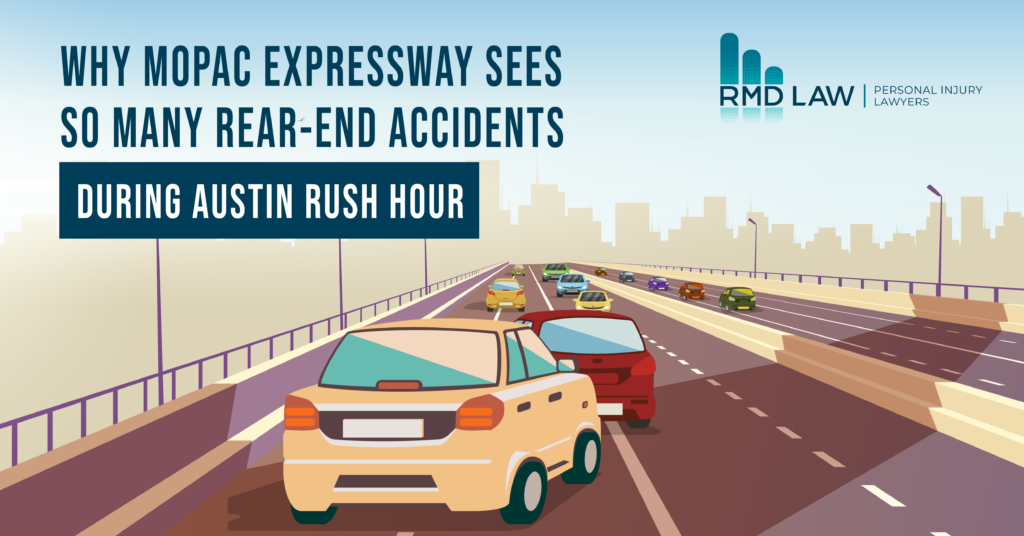
MoPac Expressway moves like a pressure valve during Austin rush hour. Traffic builds fast, then drops just as quickly. You feel it in your brakes, your steering wheel, and the gap between cars that never seems stable. That’s where most rear-end crashes start.
A MoPac accident often happens in seconds. You slow down with traffic, then the car behind you doesn’t slow down enough. One impact turns into two or three. It spreads through lanes like a chain reaction.
Many drivers assume the fault in rear-end crashes always lies with the driver in back, but reality is messier. Sudden braking, lane changes, and express lane transitions can shift how fault is evaluated under Texas negligence rules.
You also deal with injuries that don’t show up right away: whiplash, head trauma, and back strain. Some victims walk away thinking they’re fine, only to feel it days later.
This blog breaks down why these crashes happen so often on MoPac, how Texas law determines fault, and which steps matter if you get hurt in one.
Why Rear-End Crashes Happen So Often on MoPac Expressway
MoPac doesn’t give you steady breathing room during Austin rush hour. Traffic shifts fast, then slows without warning. The constant rhythm change sets the stage for a MoPac accident, especially rear-end crashes that stem from small delays in reaction.
Stop-and-go traffic creates constant braking
Stop-and-go conditions force drivers into repeated braking cycles throughout rush hour. Traffic speeds shift without warning, often within seconds. Drivers react to what’s directly ahead, but chain reactions build from farther up the road, where sudden slowdowns ripple backward faster than most people can respond safely.
Toll lane transitions and express lane access points create conflict zones
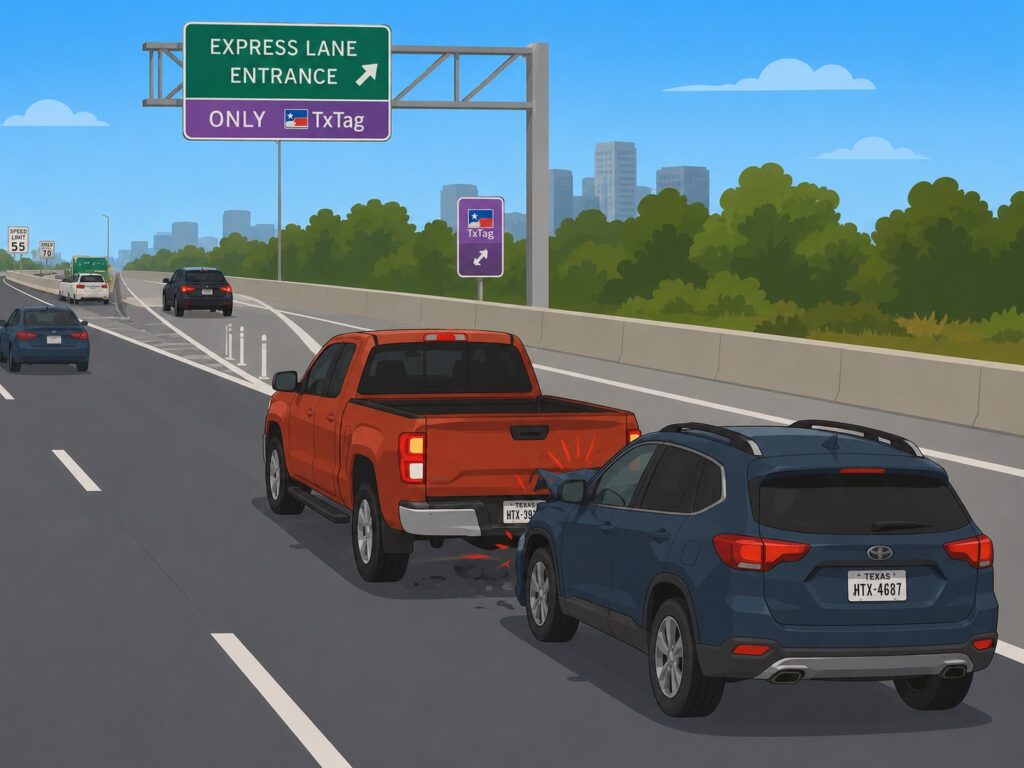
MoPac’s express lane entry and exit points create frequent merge pressure. Drivers cut across multiple lanes to reach access points, often at the last second. These sudden movements force nearby vehicles to brake hard, and following drivers may not have enough distance to react in time.
Driver behavior makes conditions worse
Human behavior adds pressure to already tight traffic conditions. Distraction slows reaction time, especially during congestion. Tailgating removes the buffer needed for sudden stops, while aggressive lane changes force unpredictable braking patterns that spread quickly through nearby traffic and increase the chance of rear-end impact.
How Fault is Determined After a MoPac Rear-End Accident
Texas negligence law looks deeper than impact points, especially when traffic shifts quickly or multiple drivers react within seconds.
1. Following too closely
Reaction time becomes the focus in stop-and-go traffic. Drivers often argue they don’t have enough space or time to stop safely when traffic suddenly slows. Texas law still expects a reasonable following distance, even in heavy congestion.
2. Evaluate sudden braking claims
Sudden braking disputes often come down to context. Investigators examine whether the lead driver stopped for legitimate traffic reasons or braked in a way that created an avoidable hazard. In heavy MoPac traffic, that distinction can shift fault.
3. Analyze lane changes and merging behavior
Aggressive merging near MoPac exits and express lane access points often triggers rear-end collisions. A driver who cuts into a tight gap forces others to brake hard, and that chain reaction often becomes central to liability disputes.
4. Determine responsibility in chain-reaction crashes
Chain-reaction crashes rarely involve just two drivers. One impact can push through several vehicles in seconds. Investigators break down each collision point to understand who reacted when, and how spacing affected the outcome.
5. Examine the evidence used to determine fault
Evidence often drives the final decision in disputed MoPac crashes. Police reports, traffic camera footage, witness accounts, and vehicle damage patterns help reconstruct the sequence and confirm or challenge each driver’s version of events.
What Injured Victims Should Do After a MoPac Accident
The steps you take after a crash on MoPac shape your physical recovery and the strength of your injury claim.
1. Seek prompt medical attention
Get checked as soon as possible, even if you feel stable at first. Injuries like whiplash, concussions, and internal trauma often build slowly after the crash. Early medical records also help connect your injuries directly to the accident, which matters when fault and damages can be reviewed.
2. Preserve evidence from the scene
Small details can matter later. Take photos of vehicle positions, lane markings, traffic flow, and road conditions if you can. Collect witness names and note anything unusual about how the crash occurred before vehicles are moved or memories fade.
3. Communicate carefully with insurance companies
Insurance adjusters will contact you quickly after a crash. Keep your statements simple and avoid guessing about speed, distance, or fault. Early recorded statements can be used later in ways you didn’t expect, especially before you understand the full extent of your injuries.
4. Track financial and personal losses
Keep a clear record of everything the crash affects. Medical bills, time off work, transportation costs, and daily limitations all add up. Even small disruptions in routine can help show how the accident changed your day-to-day life over time.
5. Consult a rear-end accident lawyer
A rear-end accident lawyer can step in when liability isn’t clear or when insurance companies start shifting blame. Legal guidance helps you understand your options, especially in cases involving chain-reaction crashes or disputed fault on MoPac.
How RMD Law Can Help After a MoPac Accident
After a MoPac crash, you’re usually dealing with more than repairs. You’re also dealing with uncertainty about fault, pressure from insurance companies, and medical costs stacking up.
1. Investigate liability
We will review crash reports, photos, and available footage to understand what actually happened on the road, focusing on timing, spacing, and driver actions that may not be obvious from the initial report.
2. Gather critical evidence
We will secure key records before they disappear. This includes traffic camera data, witness statements, vehicle damage assessments, and police documentation that help reconstruct the collision.
3. Address comparative fault allegations
We will push back when insurers try to shift blame unfairly. Our lawyers will analyze how each driver contributed to the crash, especially in rear-end and chain-reaction crashes, where fault is often disputed.
4. Calculate full damages
Look beyond immediate repair bills. We will account for medical treatment, ongoing care needs, lost income, and long-term effects on your daily life after the accident.
5. Advocate for injured crash victims
We will handle communication with insurance companies and opposing parties. We will focus on your claim while you focus on recovery, especially when negotiations become difficult or the fault remains contested.
When the Road Turns Complicated
Rear-end collisions happen often on MoPac Expressway during an Austin rush hour because traffic moves in waves. Vehicles slow suddenly, speeds shift without warning, and drivers react under tight pressure. These conditions make even small braking delays enough to trigger a crash.
Congestion, sudden braking, lane merging, and express lane transitions all contribute to these accidents. Each factor stacks on the next, turning routine commutes into high-risk driving situations.
Liability often goes beyond simply pointing to the rear driver. Chain-reaction crashes and disputed merges can spread responsibility across several motorists, depending on the events.
If you were injured in a MoPac rear-end accident, consult a car accident lawyer to understand your legal options, determine who may be liable, and pursue the compensation you may be entitled to recover. Contact RMD Law to discuss your case and next steps.
FAQs
A MoPac accident rear-end crash happens when one vehicle hits another from behind during rush hour in Austin. These collisions often stem from sudden stops, tight spacing, and rapid changes in speed along the MoPac Expressway.
In many Texas cases, the driver in the rear gets blamed for following too closely. But fault can shift if sudden braking, unsafe lane changes, or chain-reaction impacts played a role in the crash.
Get medical care right away, even if symptoms feel mild. Then, document the scene, collect witness details, and avoid giving recorded statements to insurers before you understand your injuries.
Get help from a rear-end accident lawyer if fault is disputed, injuries are serious, or insurance pushes a low settlement. Legal help can clarify liability and protect your claim early.

- Why Wrong-Way Crashes Are Increasing in Orange County at Night - September 24, 2026
- Safest Places to Ride in Orange County - September 22, 2026
- School Zone Pedestrian Accidents in California: Who’s Liable? - September 17, 2026