Key Takeaways
Recognize the unique risks of nighttime driving in California
-
- Late-night hours carry higher crash risks due to impaired driving, fatigue, and reduced visibility.
Understand the most common causes of nighttime collisions
-
- Impaired drivers, poor lighting, driver fatigue, road conditions, and speeding increase accident likelihood.
Take practical steps to prevent nighttime crashes
-
- Maintain proper vehicle lighting, limit distractions, obey traffic laws, and plan safer routes.
Work with a trusted car accident lawyer in California
-
- RMD Law can investigate nighttime collisions, assess liability, preserve evidence, and help victims secure fair compensation.
A Look Into the Types and Causes of Nighttime Driving Accidents in California
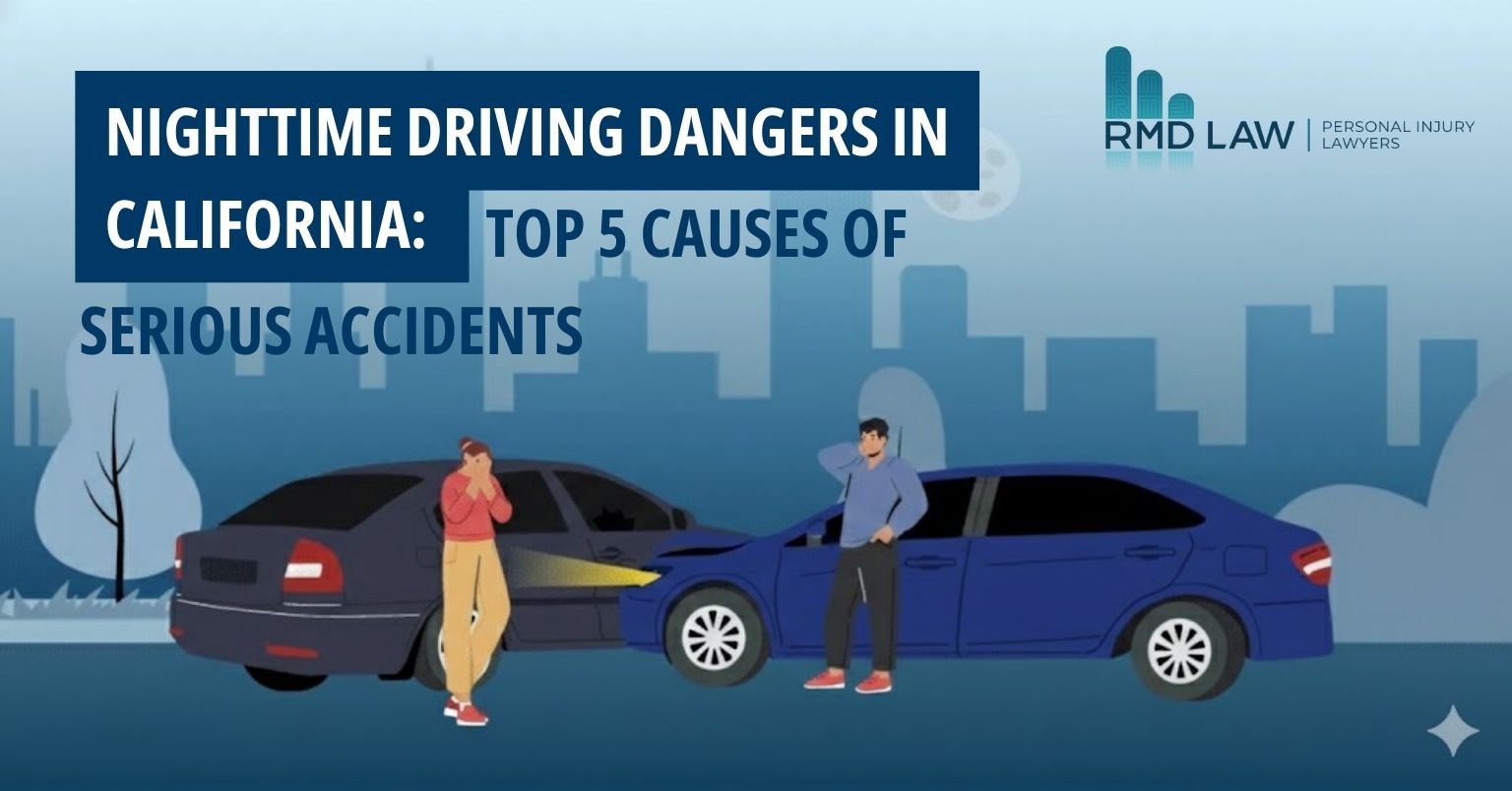
Nighttime driving in California presents unique challenges that can turn even routine trips into serious accidents. Although traffic volumes often decrease after dark, crash severity and fatality rates tend to rise. Reduced visibility, driver fatigue, and impaired driving all play a larger role at night, creating conditions far more dangerous than many drivers anticipate.
Glare from headlights, poorly lit roads, and slower reaction times further increase risks. Beyond physical injuries, nighttime collisions often cause significant financial strain through medical bills, lost income, and insurance disputes. Attorneys at RMD Law regularly handle claims arising from late-night crashes, giving them firsthand insight into why these accidents occur.
This article will examine common types, underlying causes, and practical prevention strategies for nighttime driving accidents in California.
5 Different Types of Nighttime Driving Accidents in California
Nighttime accidents tend to follow recognizable patterns. By recognizing these categories, drivers can understand risk scenarios and the potential legal implications if a crash occurs.
1. Accidents involving impaired drivers
Impaired driving remains one of the leading contributors to nighttime collisions. Alcohol, recreational drugs, and certain prescription medications all reduce judgment, coordination, and reaction time. From 2022 to 2024, there was an average of 4,635 alcohol-involved fatalities and serious injuries (TIMS).
Late-night hours, particularly on weekends, see a higher prevalence of intoxicated drivers. DUI-related crashes often result in serious injuries or fatalities and carry criminal and civil consequences. Evidence of impairment often establishes negligence, which can significantly affect personal injury claims.
2. Collisions due to low visibility or poor lighting
Limited visibility is a natural challenge at night. Headlight glare, insufficient street lighting, fog, and rain all make it harder to detect hazards in time. These collisions commonly occur at intersections, rural highways, and poorly illuminated urban streets. Drivers may fail to see pedestrians, cyclists, or stalled vehicles, which increases the risk of severe accidents.
3. Fatigue-related crashes
Driver fatigue is a major factor in nighttime accidents. Circadian rhythm effects make late-night and early-morning hours particularly dangerous for alertness. Drowsy drivers may drift between lanes, miss traffic signals, or fall asleep at the wheel. Warning signs such as frequent yawning, heavy eyelids, and difficulty focusing can indicate when a driver should take a break.
4. Multi-vehicle pile-ups
Even with lower traffic volumes, nighttime congestion, freeway construction, or sudden braking can lead to chain-reaction crashes involving multiple vehicles. However, it can be complex to determine who’s at fault in these accidents. California’s comparative fault rules require careful evaluation of each driver’s actions, making legal guidance critical in such cases.
5. Single-vehicle accidents
Single-vehicle crashes often involve rollovers, roadway departures, or collisions with fixed objects like guardrails or trees. Nighttime conditions—limited visibility, fatigue, and misjudged curves—make these accidents more likely. Liability questions can still arise, particularly if road conditions, signage, or vehicle defects contributed to the crash.
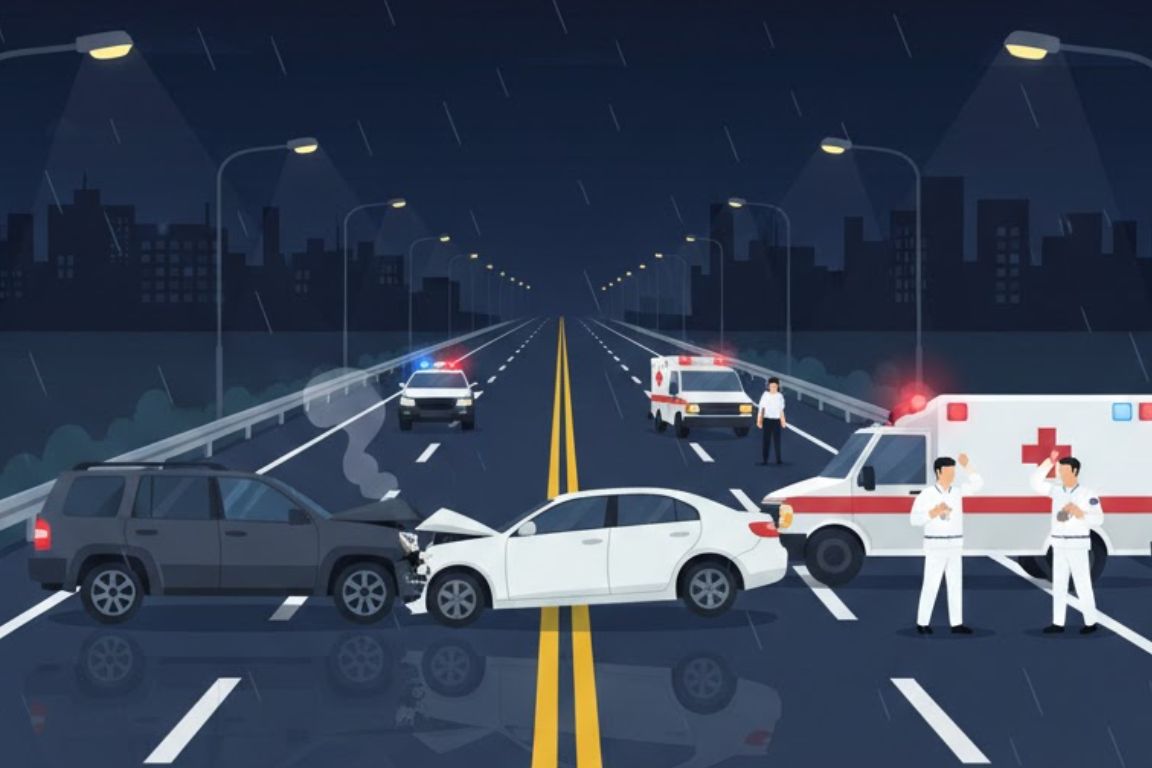
5 Common Causes of Nighttime Driving Accidents in California
Nighttime driving accidents usually result from a combination of human behavior, environmental conditions, and reduced perception after dark. Understanding these causes can help drivers identify risks early and explain why nighttime collisions often lead to more severe injuries and complex legal claims.
1. Impaired driving
Impaired driving remains one of the most significant contributors to nighttime accidents. Alcohol consumption peaks during evening and late-night hours, particularly on weekends and holidays. In addition to alcohol, recreational drugs and certain prescription medications can impair reaction time, depth perception, and decision-making.
Even substances that may not noticeably affect daytime driving can become far more dangerous at night when visibility is reduced, and fatigue sets in. From a legal perspective, impairment often establishes negligence, and evidence of intoxication can significantly influence fault determinations and damage awards in California personal injury cases.
2. Reduced visibility
Darkness fundamentally limits a driver’s ability to see hazards in time to react. Headlight glare from oncoming vehicles, poorly illuminated roadways, faded lane markings, and inadequate street lighting all contribute to delayed perception.
Pedestrians, cyclists, and disabled vehicles are especially difficult to spot at night, increasing the likelihood of high-impact collisions. Reduced visibility also affects depth perception, making it harder to judge speed and distance—an issue that frequently arises in rear-end and intersection crashes.
3. Driver fatigue and distractions
Driver fatigue is a well-documented risk factor in nighttime accidents. The body’s natural circadian rhythm causes alertness to decline late at night and in the early morning hours. Fatigued drivers may experience slower reaction times, tunnel vision, or microsleep episodes lasting just seconds—long enough to cause a serious crash.
When fatigue is combined with distractions such as mobile phone use, navigation systems, or in-vehicle entertainment, the risk multiplies. These factors often play a critical role in determining liability following a nighttime collision.
4. Environmental and road conditions
Road conditions that may be manageable during daylight hours become far more hazardous at night. Rain-slicked pavement, fog, debris, wildlife crossings, and poorly maintained roads are harder to detect in low-light conditions. Drivers may not recognize hazards until evasive action is no longer possible, leading to loss-of-control or run-off-road crashes.
5. Aggressive and speeding drivers
Lower traffic volumes at night can encourage speeding and aggressive driving. Some motorists take advantage of open roads, underestimating stopping distances and overestimating their ability to react to unexpected hazards. Speed not only increases the likelihood of a crash but also significantly worsens injury severity, making nighttime speeding a frequent factor in catastrophic injury cases.
5 Tips to Prevent Nighttime Driving Accidents
Even though nighttime driving carries inherent risks, adopting proactive safety measures can greatly reduce the likelihood of accidents. These practices protect you and others, which affect legal outcomes in case of a collision.
1. Maintain proper vehicle lighting
Regularly check that headlights, taillights, and dashboard lights are functioning correctly and aligned. Clean lenses and remove obstructions to maximize visibility. Proper lighting helps you spot hazards earlier and ensures other drivers can see your vehicle, which is particularly important in low-lit or rural areas.
2. Limit distractions
Minimize mobile phone use, infotainment adjustments, and other in-car distractions while driving. Nighttime conditions already reduce reaction time, and distractions significantly increase the risk of collision. Staying focused can prevent minor incidents from turning into serious accidents.
3. Manage fatigue
Avoid driving during hours when alertness naturally declines, such as late at night or early morning. Take regular breaks on long trips, consider naps, or share driving duties when possible. By recognizing signs of drowsiness, like frequent yawning or drifting between lanes, you can prevent fatigue-related crashes.
4. Obey traffic laws and speed limits
Speeding and aggressive driving are particularly dangerous at night due to reduced visibility and slower reaction times. Follow posted limits and road rules to improve your safety. Additionally, be important in establishing fault and liability in the event of a collision.
5. Plan routes and avoid high-risk areas
Choose well-lit streets, major highways, and routes with consistent signage when possible. Exercise caution in areas prone to pedestrian or wildlife crossings, construction zones, or poorly maintained roads. Being aware of high-risk locations reduces the likelihood of unexpected hazards.

How RMD Law Helps Victims in Nighttime Car Accidents
Nighttime car accidents can be overwhelming, leaving victims unsure about the next steps. RMD Law helps clients navigate these challenges through clear guidance and legal support:
1. Prioritize safety and document the scene
Immediately after a collision, ensure personal safety and move to a secure location if possible. Take photos, record vehicle positions, and gather witness statements. Proper documentation strengthens any potential claim.
2. Seek prompt medical attention
Even minor injuries can have serious long-term effects. RMD Law advises victims to see a medical professional as soon as possible. Medical records serve as critical evidence in personal injury claims.
3. Evaluate liability and fault
Attorneys assess all contributing factors, including impaired drivers, driver fatigue, road conditions, and multi-vehicle involvement. Understanding liability is crucial under California’s comparative fault laws.
4. Negotiate with insurance companies
RMD Law handles communication with insurers to ensure victims receive fair compensation for medical bills, lost wages, property damage, and long-term care. Their guidance reduces the stress of dealing with complex insurance processes.
5. Provide ongoing legal support
From filing claims to representing clients in court if necessary, the firm ensures victims’ rights are protected throughout the legal process.
6. Educate clients on their legal rights
Beyond handling claims, RMD Law informs victims about their legal options and potential outcomes, empowering them to make informed decisions every step of the way.
The Road Ahead
Nighttime driving in California carries unique risks, but understanding the types of accidents, their underlying causes, and practical prevention strategies can help drivers stay safe. Legal awareness is also crucial, as nighttime collisions often involve complex liability and insurance considerations.
Working with an experienced car accident lawyer can ensure your rights are protected and help you pursue fair compensation for injuries or damages. Nighttime driving accidents can have serious consequences, but knowing the risks and your legal options can make a difference.
Contact RMD Law’s experienced attorneys if you or a loved one has been injured in a late-night collision. We guide you through your claim and help you pursue the compensation you deserve.
FAQs
1. What are the most common nighttime driving accidents in California?
Impaired driving, fatigue-related crashes, collisions due to poor visibility, multi-vehicle pile-ups, and single-vehicle accidents are the most frequent. These often result in more severe injuries than daytime crashes.
2. Why are nighttime crashes more dangerous?
Reduced visibility, slower reaction times, fatigue, and higher instances of impaired driving increase the severity and complications of injuries.
3. How can drivers prevent nighttime accidents?
Maintain vehicle lighting, minimize distractions, obey speed limits, take breaks during long drives, and plan well-lit routes.
4. Who can help after a nighttime collision?
An experienced car accident lawyer from RMD Law can guide victims through claims, preserve evidence, and secure fair compensation.
5. Where do nighttime accidents most often occur?
Highways, intersections, rural roads, and poorly lit urban streets see the highest frequency of late-night collisions.
6. When should victims seek medical attention?
Immediately after any nighttime accident, even for minor injuries, to protect health and establish documentation for potential claims.

- School Zone Pedestrian Accidents in California: Who’s Liable? - September 17, 2026
- Two Roads, 76 Deaths: New Data On Fresno County’s Most Dangerous Roads - September 15, 2026
- Why Wrong-Way Crashes Are Increasing in Orange County at Night - September 10, 2026