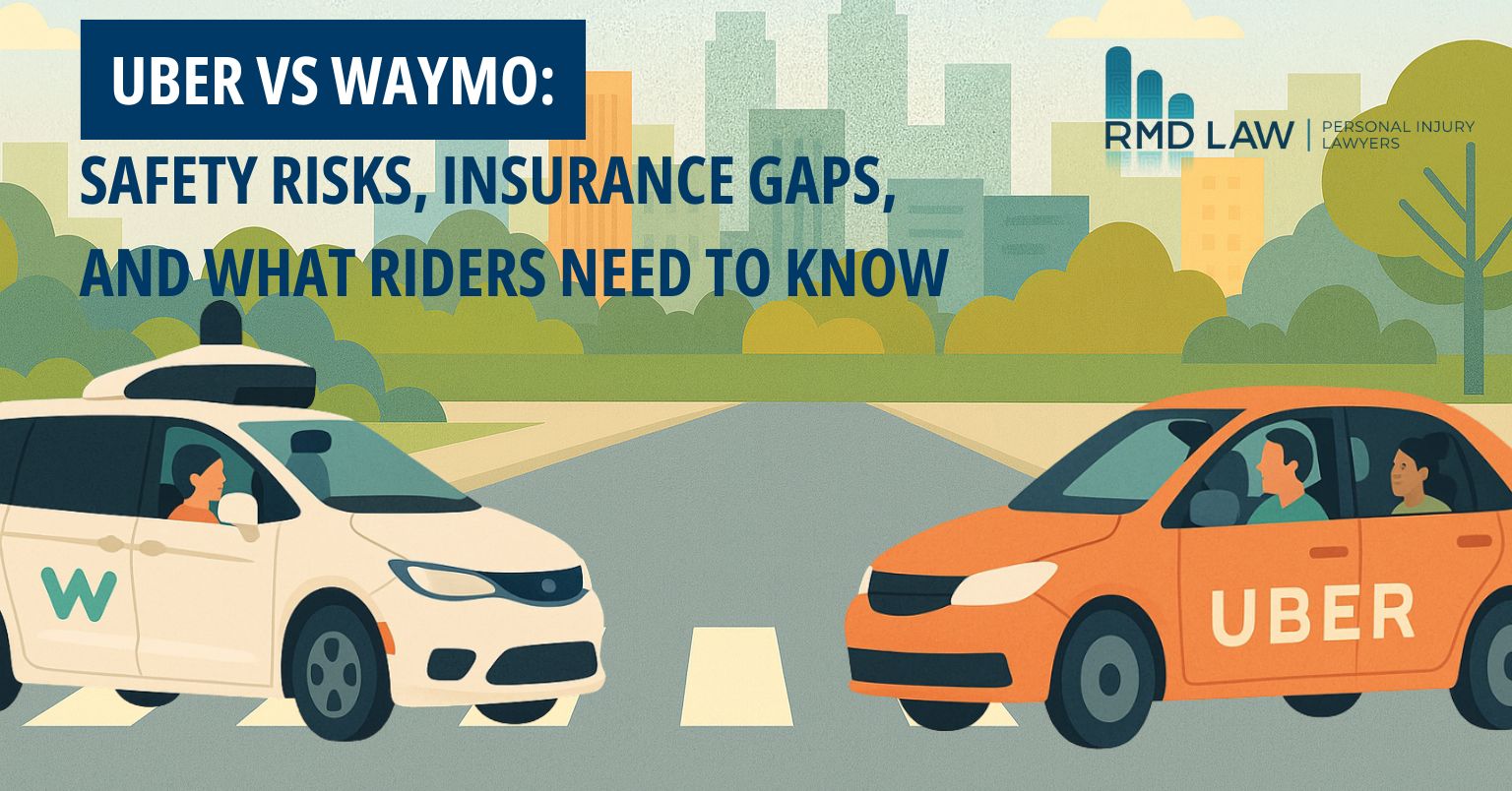
It is 2026, and California commuters now choose between two very different ride options: human driven Uber vehicles and Waymo’s autonomous robotaxis. While both promise convenience, the risks they expose passengers and the public are not equal. The most important differences emerge after a crash, when safety claims give way to liability disputes and insurance coverage determines whether an injured person is protected or financially abandoned.
Waymo’s self-driving vehicles operate through controlled, rule based software within defined service areas. According to data released by Waymo, its vehicles are involved in fewer injury-causing crashes per mile than human drivers. At the same time, autonomous ride services remain new and limited in scale. Waymo has not been operating long enough to generate comprehensive, independent safety data, and its vehicles are still part of a regulated, experimental deployment. That makes insurance structure especially important, because passengers are relying on corporate safeguards rather than human judgment.
Uber takes the opposite approach and places passengers directly in the hands of individual drivers. Human error is not a side risk in this model, it is the central one. Uber’s own safety reports document dozens of traffic fatalities and thousands of serious injuries linked to rides on its platform. Those reports also reveal a disturbing pattern of passenger assaults, including data showing that sexual assaults are reported during Uber rides with alarming frequency. These are not hypothetical risks. They are known outcomes of a system that depends on human drivers while aggressively limiting its responsibility when things go wrong.
These operational choices are compounded by Uber’s insurance decisions. Through years of lobbying and its financial backing of Proposition 22, Uber successfully reshaped California law to reduce its financial exposure after crashes. The result is an insurance framework that leaves riders with sharply reduced protection in uninsured and hit and run scenarios and no immediate medical coverage at all. When an Uber ride ends in a serious collision, passengers often discover too late that the company’s promises of safety do not extend to meaningful financial protection.
This blog examines how these differences in technology, corporate policy, and insurance coverage affect real injury victims. We break down liability, uninsured and underinsured motorist coverage, and Medical Payments coverage for Waymo and Uber so you can understand the risks you are assuming and what legal protections actually exist if you are injured in a California rideshare or autonomous vehicle crash.
Key Takeaways
- Insurance matters more than the ride itself after a crash.
The biggest differences between Uber and Waymo appear after an accident, when liability, UM and UIM coverage, and MedPay determine whether an injured person is protected or left paying out of pocket. - Waymo offers stronger protection when it is at fault, but coverage gaps still exist.
Waymo carries a $5 million liability policy and provides limited no fault MedPay, which improves access to compensation in serious crashes. However, Waymo provides no UM or UIM coverage, leaving passengers exposed when another driver causes the collision. - Uber has shifted financial risk away from itself and onto riders.
Through lobbying and Proposition 22, Uber helped reduce required UM and UIM limits to levels that are often inadequate for serious injuries, while providing no MedPay at all. Riders bear the consequences when crashes involve uninsured or hit and run drivers. - Reduced UM and UIM limits can leave injured riders financially stranded.
Uber’s current UM and UIM limits may be exhausted by emergency care alone, forcing injured passengers to rely on their own insurance or absorb losses despite having done nothing wrong. - Personal UM and UIM coverage is essential for anyone on California roads.
Given Waymo’s lack of UM and UIM protection and Uber’s sharply reduced limits, carrying robust personal coverage is one of the most effective ways to protect your health, finances, and recovery after a rideshare or autonomous vehicle crash.
Autonomous Systems vs. Human Drivers: A Coverage and Risk Comparison
| Coverage Type | Uber | Waymo |
|---|---|---|
| Liability | $1M | $5M* |
| UM/UIM | $60K/$300K | $0* |
| MedPay | $0 | $25K* |
Understanding Liability, UM/UIM, and MedPay Coverage
- Liability Insurance
Liability insurance pays for injuries and property damage caused by a driver or vehicle operator who is legally at fault for an accident. It is the primary source of compensation for injured victims when another party is responsible. Adequate liability limits are critical because they determine whether there is enough insurance coverage to pay for medical expenses, lost wages, and pain and suffering after a serious crash. When liability coverage is insufficient, injured victims may recover only a small portion of their total losses, even when fault is clear. - Uninsured and Underinsured Motorist (UM/UIM) Coverage
Uninsured and underinsured motorist coverage protects you when the at-fault driver has no insurance or does not carry enough coverage to fully compensate your injuries. In a hit and run or uninsured driver accident, UM coverage steps in and functions as the at-fault driver’s liability insurance. Underinsured motorist coverage applies when the responsible party’s policy limits are too low to cover the full extent of your damages. UM and UIM coverage are essential because they close a common coverage gap and prevent injured victims from being left responsible for their own medical bills and related losses when the negligent driver lacks adequate insurance. - Medical Payments (MedPay) Coverage
Medical Payments coverage, commonly known as MedPay, is a no fault insurance benefit that pays for medical and funeral expenses regardless of who caused the accident. MedPay typically has lower policy limits but provides immediate financial support for ambulance services, emergency room care, hospital treatment, and health insurance copays. This coverage can be especially valuable in the early stages of an injury claim, as it allows accident victims to receive prompt medical care while liability and fault are still being investigated. In California, MedPay is optional, but it often proves invaluable for passengers, rideshare users, and individuals injured in autonomous vehicle crashes by ensuring medical bills are paid without delay.
Waymo vs. Uber: Insurance Limits and Risk Exposure
Understanding the differences between Waymo and Uber insurance coverage is critical for passengers, pedestrians, and drivers injured in rideshare or autonomous vehicle accidents. While both companies operate legally on California roads, their insurance structures expose accident victims to very different levels of financial risk.
Liability Coverage Limits: Waymo $5 Million vs. Uber $1 Million
Waymo, the autonomous vehicle company owned by Google’s parent company Alphabet, carries a $5 million liability insurance policy for its driverless vehicles operating in California. This high coverage limit is required under California Department of Motor Vehicles regulations for autonomous vehicle deployment and is designed to protect the public in the event a self-driving car causes injury or property damage.
When a Waymo vehicle is at fault in a collision, whether involving a pedestrian, another vehicle, or a passenger inside the robotaxi, up to $5 million may be available to compensate injured victims. This significantly increases the likelihood that medical expenses, lost income, pain and suffering, and other damages can be fully covered in serious or catastrophic accidents.
By comparison, Uber provides a $1 million liability insurance policy during active rides, meaning when a driver is transporting a passenger or en route to pick one up. While this amount is well above California’s minimum insurance requirements for personal vehicles and is sufficient in many accidents, it can be exhausted quickly when multiple people are injured or when a crash results in severe or permanent injuries. From an injured person’s perspective, Waymo’s higher liability limit generally translates to greater financial protection when the autonomous vehicle is responsible for the crash.
Uninsured Motorist Coverage: A Shift in Protection
The insurance landscape changes dramatically when uninsured and underinsured motorist coverage is examined. For years, Uber provided up to $1 million in UM and UIM coverage for passengers injured by uninsured or hit and run drivers. That coverage functioned as a meaningful safety net, protecting riders when a third party caused a crash but lacked sufficient insurance.
That protection was not lost by chance. It was deliberately rolled back after Uber aggressively pushed for regulatory and legislative changes that reduced its financial obligations. Under current California law, rideshare companies are now required to provide only $60,000 per person and $300,000 per accident in UM and UIM coverage. These limits are grossly inadequate for serious injuries and can be exhausted almost immediately by emergency care, hospitalization, or surgery. The practical result is that injured Uber passengers are left to absorb losses or rely on their own insurance, even though they paid for a ride that promised safety and accountability.
This reduction in coverage followed years of lobbying by Uber, including the release of internal policy papers and its financial backing of Proposition 22, the most expensive ballot initiative in California history. Uber and other gig economy companies spent hundreds of millions of dollars to reshape California law in their favor. These efforts succeeded in shifting financial risk away from Uber and onto riders, injured victims, and the public. The sharp reduction in UM and UIM coverage is a direct consequence of those corporate policy decisions, not an unintended regulatory oversight.
Waymo presents a different but still concerning risk profile. Publicly available information indicates that Waymo provides no UM or UIM coverage for passengers. If a Waymo robotaxi is struck by an uninsured or underinsured human driver, Waymo’s insurance does not compensate the passenger unless Waymo itself is at fault. In those situations, injured riders must rely entirely on their own auto insurance or other sources of recovery. While Waymo carries high liability limits when its vehicle causes harm, the absence of any UM or UIM protection leaves passengers exposed to significant risk from third party drivers.
Medical Payments: Waymo Provides Coverage, Uber Does Not
Another important distinction involves Medical Payments coverage. Waymo has obtained Medical Payments coverage through a third party insurer for the benefit of its riders. Available information suggests this coverage provides $25,000 per person for reasonable and necessary medical expenses resulting from an accident, regardless of fault. This type of no fault coverage can pay for emergency treatment, hospital care, and health insurance deductibles or copayments without waiting for a liability determination.
Uber’s insurance policies do not include Medical Payments coverage for passengers or drivers. As a result, injured Uber riders must rely on personal health insurance, MedPay from their own auto policy, or pursue a liability claim before medical expenses are reimbursed. This lack of immediate medical coverage can delay treatment or result in significant out of pocket costs while fault and insurance responsibility are disputed.
Why These Insurance Differences Matter
From a risk exposure standpoint, Waymo provides stronger protection when its vehicle is at fault by carrying significantly higher liability limits and offering limited no fault medical coverage through MedPay. This structure increases the likelihood that injured passengers, pedestrians, and other motorists will have access to meaningful compensation without immediate financial pressure after a serious crash.
Uber’s insurance framework places substantially more risk on riders. While Uber does maintain a $1 million liability policy during active rides, that coverage applies only when the Uber driver is legally at fault. When a crash is caused by a hit and run driver or an uninsured or underinsured motorist, Uber passengers now face sharply reduced protection due to lowered UM and UIM limits. In those situations, victims may be forced to rely on their own insurance policies or pay medical expenses out of pocket, even though they did nothing to cause the collision.
Compounding this risk, Uber provides no Medical Payments coverage at all. There is no immediate, no fault source of funds to cover emergency care, hospital treatment, or medical copays while liability is investigated. As a result, injured Uber passengers often encounter delayed medical treatment, financial strain, and pressure from insurers before their claims are resolved.
For accident victims, these insurance differences are not technical details. They directly affect whether medical bills are paid promptly, whether necessary treatment is delayed, and whether compensation is ultimately sufficient to cover the true physical, financial, and long term impact of their injuries.
Understanding Insurance Risks: How to Protect Yourself
Waymo offers significantly stronger protection when its vehicle is at fault by carrying much higher liability limits and providing limited no fault Medical Payments coverage. This increases the likelihood that injured passengers, pedestrians, and other motorists can access prompt and adequate compensation without immediate financial pressure.
Uber’s insurance model places riders at far greater risk. While Uber maintains a $1 million liability policy during active rides, that coverage applies only when the Uber driver is legally at fault. If a crash involves a hit and run driver or an uninsured or underinsured motorist, passengers face sharply reduced protection due to drastically lowered UM and UIM limits. Uber also provides no Medical Payments coverage, leaving riders responsible for emergency care, hospital bills, and copays while liability is investigated. These gaps can delay treatment, create financial strain, and limit the ability to recover fully after a serious accident.
For anyone traveling on California roads, whether in a rideshare, an autonomous vehicle, or your own car, carrying robust UM and UIM coverage on your personal auto policy is essential. Given Waymo’s lack of UM and UIM protection and Uber’s sharply reduced limits, personal coverage serves as a critical safety net. Maintaining adequate underinsured motorist coverage is a proactive step that can protect your health, finances, and recovery if you are ever injured in an Uber or Waymo related crash.

Injured in a Uber or Waymo Accident? RMD Law Can Help
When a Waymo or Uber ride ends in a serious crash, the legal and financial fallout can be overwhelming. These cases often involve layered insurance policies, disputed fault, evolving autonomous vehicle regulations, and corporate defendants that move quickly to protect their own interests. At the same time, injured victims are left dealing with painful injuries, medical bills, lost income, and uncertainty about how their recovery will be paid for.
RMD Law represents individuals injured in both rideshare crashes and autonomous vehicle accidents throughout California. Our attorneys understand the critical differences between Uber and Waymo claims, including how liability is determined, how coverage gaps affect recovery, and how corporate insurance strategies can limit compensation. We know how to preserve key evidence, analyze vehicle data, identify negligent drivers or system failures, and navigate complex insurance disputes to pursue full accountability.
Our firm handles every step of the process, from early investigation and insurer communications to settlement negotiations and, when necessary, litigation. If you or a loved one was injured in an Uber or Waymo related accident, you do not have to navigate this alone. Contact RMD Law at (949) 828-0015 for a free consultation. We will evaluate your case, explain your legal options, and fight to secure the compensation you need to move forward with confidence and stability.
FAQs
Waymo carries $5 million in liability insurance and provides limited no fault MedPay coverage for passengers. However, Waymo does not offer uninsured or underinsured motorist coverage, so if another driver causes the crash and lacks insurance, passengers must rely on their own auto insurance or other resources.
Uber carries $1 million in liability coverage for active rides, but its uninsured and underinsured motorist coverage has been drastically reduced to $60,000 per person and $300,000 per accident. Uber also provides no MedPay, leaving passengers responsible for immediate medical bills if another driver is at fault or uninsured.
Uber lobbied for legislative and regulatory changes, including backing Proposition 22, which allowed the company to lower its financial obligations. This shift significantly reduced passenger protections in crashes caused by uninsured, underinsured, or hit and run drivers.
No. Both systems have coverage gaps. Waymo lacks UM and UIM protection, and Uber provides limited coverage after policy changes. Carrying robust UM and UIM coverage on your personal auto policy is essential to protect yourself financially in a serious accident.
Waymo offers MedPay coverage of approximately $25,000 per passenger for emergency medical care, hospital visits, and certain deductibles or copays. Uber does not provide MedPay, meaning passengers must use personal insurance or pay out of pocket while liability is determined.

- Traumatic Brain Injury Long-Term Effects and How to Secure Your Settlement - October 20, 2026
- 2026 Updates to California E-Bike and Motorized Scooter Sidewalk Laws - October 15, 2026
- Map of Level 1 Trauma Centers in Northern California: Where to Go When Seconds Count - October 13, 2026