
Key Takeaways
- Understand how roundabouts and traffic circles function in California
Confusing lanes, unclear signs, or unfamiliar designs can increase the risk of collisions and traffic violations.
- Learn the rules for entering and exiting safely
Yield to circulating traffic, choose the correct lane, use turn signals, and watch for pedestrians and cyclists to prevent accidents.
- Recognize common mistakes drivers make in roundabouts
Hesitation, lane changes inside the circle, misjudging gaps, and ignoring pedestrians are frequent errors that can lead to serious collisions.
- Work with a trusted car accident lawyer in California
RMD Law can investigate confusing or poorly marked roundabouts, gather evidence, and fight for the compensation you deserve after an accident.
Understanding Roundabouts: A Driver’s Guide to Safety and Right-of-Way
You’re driving through a busy California roundabout, unsure which lane to take or who has the right-of-way. A moment of hesitation could confuse other drivers or even lead to a collision.
Many motorists face the same uncertainty, often mixing up traffic circles with modern roundabouts, which can result in accidents, traffic citations, or near-misses. This article will break down how these intersections function, outline essential rules for entering and exiting safely, and highlight common mistakes to avoid.
Understanding these rules is not just about following the law—it’s about protecting yourself, others on the road, and your legal rights if an accident occurs.
What Are Traffic Circles and Roundabouts?
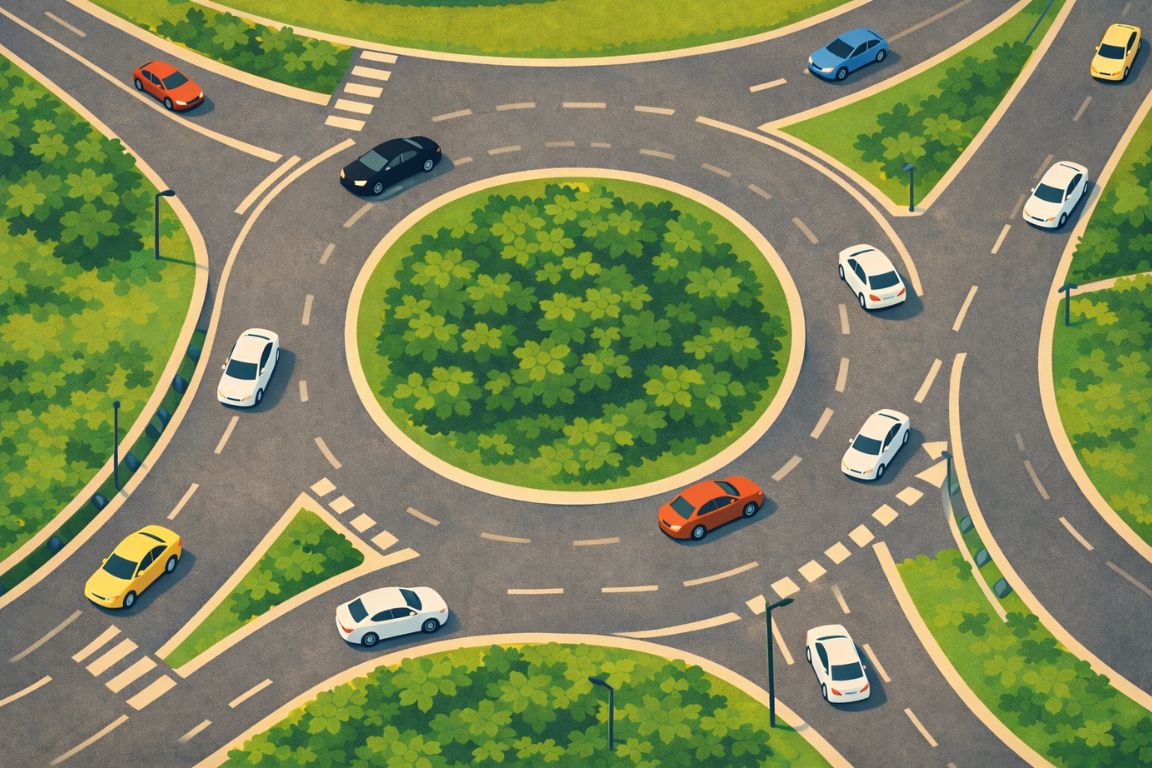
Traffic circles and modern roundabouts are both circular intersections designed to keep traffic moving smoothly, but they are not the same. Traditional traffic circles are often larger, sometimes allow higher speeds, and may have stop signs or yield signs at certain entry points. Modern roundabouts, on the other hand, are engineered to improve safety by slowing vehicles, controlling entry, and minimizing conflict points.
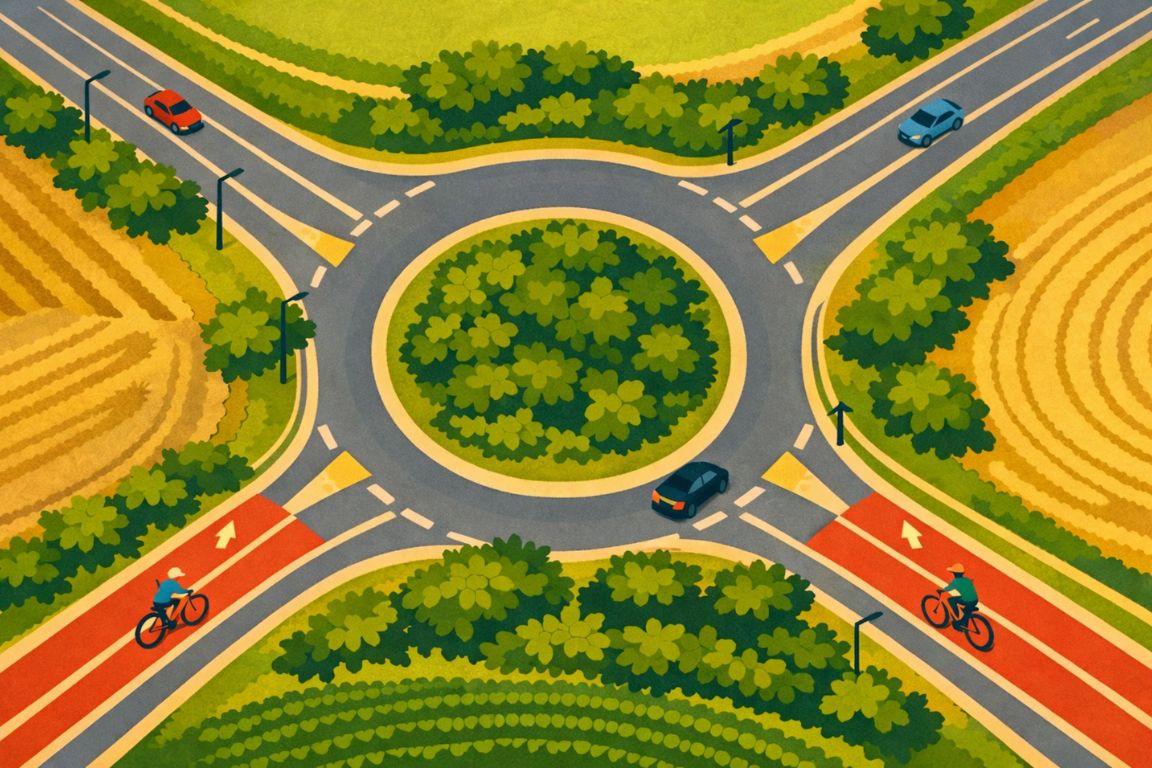
The main purpose of these intersections is to improve traffic flow, reduce severe collisions, and manage high-volume areas efficiently. Roundabouts typically feature a single or multi-lane design, clear lane markings, and splitter islands that guide vehicles safely into and out of the circle.
For example, a typical California roundabout might be found at a suburban intersection where two busy roads meet. Clear signage and yield markings help drivers enter safely while keeping traffic moving steadily without the need for traffic lights. By understanding the differences and purpose of these intersections, drivers can navigate them with confidence and avoid accidents.
Rules for Entering and Exiting Roundabouts
Navigating a roundabout safely starts with following the correct rules for entering and exiting. These rules reduce confusion, prevent collisions, and help traffic flow smoothly.
Rules for Entering:
- Yield to traffic already in the roundabout – Vehicles already circulating inside the roundabout always have the right-of-way. Enter only when there is a safe gap, as forcing your way in can cause collisions and disrupt traffic flow.
- Watch for pedestrians and cyclists – Pedestrians at crosswalks near the roundabout entry always have the right-of-way, and cyclists may be sharing the lane or using designated paths. Stopping to let them pass ensures safety and helps you avoid citations.
- Choose the correct lane – Pay attention to signage and lane markings before entering. Selecting the correct lane in advance is crucial, especially in multi-lane roundabouts, to avoid last-minute lane changes that can lead to accidents.
Rules for Exiting:
- Use your turn signal – Indicating your exit lets other drivers know your intentions and reduces confusion. Always signal well in advance to provide clear guidance to vehicles behind you.
- Stay in your lane – Do not change lanes while inside the roundabout, even if your exit is in a different lane. Maintaining your lane keeps traffic predictable and prevents side collisions.
- Yield to pedestrians at crosswalks – Before fully exiting the roundabout, check for pedestrians and allow them to cross safely. Ignoring crosswalks can result in serious injuries or legal liability.
Right-of-Way Tips for Drivers in Roundabouts
Knowing the right-of-way rules is crucial for safely navigating roundabouts and preventing accidents. Here are the most important tips for drivers:
Vehicles inside the roundabout always have the right-of-way
If you are approaching a roundabout, wait for a safe gap before entering. For example, entering without yielding can cause side collisions with vehicles already circulating.
Pedestrians have right-of-way at crosswalks before entries and exits
Always stop for pedestrians, even if the road seems clear. This ensures safety for everyone and prevents legal consequences in case of an accident.
Drivers entering multi-lane roundabouts must select the correct lane in advance
Planning your lane before entering avoids last-minute lane changes that can lead to collisions. For instance, choosing the left lane when you plan to take the first exit can confuse other drivers and create a dangerous situation.
Emergency vehicles: pull over only after entering the roundabout
Never stop abruptly while entering; continue circulating safely and yield to emergency vehicles when possible. This ensures traffic keeps flowing while allowing emergency responders to pass safely.
Common Mistakes Drivers Make in Roundabouts
Even experienced drivers can make errors when navigating roundabouts. Understanding these common mistakes can help you avoid collisions and citations:
1. Hesitating or stopping inside the circle
Stopping unexpectedly can confuse drivers behind you and increase the risk of rear-end collisions. Roundabouts are designed for continuous movement, so maintain a steady speed and only stop if necessary for safety.
2. Changing lanes within the roundabout
Switching lanes while circulating can cause side collisions and disrupt traffic flow. Always select your lane before entering and stay in it until you exit.
3. Ignoring pedestrians or cyclists
Failing to yield at crosswalks or misjudging cyclist paths can result in serious injuries and legal liability. Always scan for pedestrians and cyclists at entry and exit points.
4. Misjudging gaps or speed
Entering too quickly or hesitating too long can create dangerous situations. Wait for a safe gap and adjust your speed to match the flow of circulating traffic.
5. Confusing large vs. small roundabouts
Large roundabouts may have multiple lanes and more complex exits, while small roundabouts may have single lanes and tighter turns. Misjudging the type can lead to lane errors, near-misses, or collisions.
Where Accidents Often Happen in Roundabouts and Why
Roundabouts are designed to improve safety, but certain areas still see more collisions than others. Knowing where accidents are most likely to occur can help drivers stay alert, avoid mistakes, and reduce the risk of serious injuries.
Entry and exit points
These are the most common sites for collisions because drivers may misjudge gaps or fail to yield. In multi-lane roundabouts, confusion about lane choice can lead to side-swipes or rear-end collisions.
Poorly marked intersections
Roundabouts with faded or missing signs can confuse drivers, causing hesitation or incorrect entries. Clear signage is critical for guiding vehicles safely through the circle.
High pedestrian or cyclist activity
Crosswalks near roundabout entries and exits often see heavy pedestrian traffic. Drivers who don’t watch for pedestrians or cyclists risk collisions and potential legal liability.
Complex intersections with multiple connecting streets
Roundabouts that link several streets or have unusual layouts can overwhelm drivers, leading to improper lane selection, last-minute maneuvers, or missed exits. Awareness and proper lane planning are essential in these scenarios.
How a Traffic Accident Lawyer Can Help After a Roundabout Collision
Accidents in roundabouts can be confusing and stressful, especially when multiple vehicles, pedestrians, or unclear signage are involved. A skilled traffic accident lawyer can guide you through the legal process and help protect your rights. Here’s how:
1. Investigate the scene
Lawyers document lane markings, traffic signs, and the overall layout of the roundabout. Understanding the intersection’s design helps determine fault and strengthens your case.
2. Gather evidence
Attorneys can secure dashcam footage, traffic camera recordings, and witness statements before they are lost. This evidence can be crucial for proving liability and supporting claims.
3. Negotiate with insurers
Insurance companies may try to minimize payouts or assign fault unfairly. A lawyer advocates on your behalf to ensure you receive fair compensation for medical expenses, vehicle damage, and other losses.
4. Address citations and DMV points
If a ticket was issued during the accident, attorneys can help challenge or mitigate its impact, protecting your driving record.
5. Provide legal guidance
Lawyers guide you through claims, settlements, or court proceedings, making the process less stressful. They also explain your rights and the best steps to maximize compensation.
Navigate Roundabouts Safely
Understanding traffic circles and roundabout rules is essential for staying safe, avoiding citations, and preventing accidents. Even when drivers follow the rules, confusing intersections or heavy traffic can still lead to collisions and injuries.
That’s why legal guidance is crucial if you are involved in a roundabout accident. Experienced car accident lawyers can help investigate the scene, gather evidence, and advocate for your rights with insurers or in court.
If you’ve been injured in a traffic circle or roundabout accident in California, contact RMD Law for a free consultation. Our attorneys fight to protect your rights and secure the compensation you deserve.
FAQs
1. What is the difference between roundabouts and traffic circles?Roundabouts are smaller, engineered intersections designed to slow traffic and reduce collisions, while traditional traffic circles may allow higher speeds and less structured entries. Roundabouts have clear lane markings and yield rules to guide drivers.
2. Who has the right-of-way in a roundabout?Vehicles already inside the roundabout always have the right-of-way, while entering drivers must yield. Pedestrians at crosswalks also have priority, and drivers should watch for cyclists sharing the lane.
3. What are common mistakes drivers make in roundabouts?Frequent errors include stopping or hesitating inside the circle, changing lanes within the roundabout, ignoring pedestrians, and misjudging entry gaps. These mistakes increase the risk of collisions and citations.
4. Where do most roundabout accidents occur?Accidents often happen at entry and exit points, in multi-lane circles, at poorly marked intersections, and areas with high pedestrian or cyclist activity. Complex intersections with multiple connecting streets are also higher risk.
5. How can RMD Law help after a roundabout accident?RMD Law can investigate the intersection, gather evidence like traffic camera footage, address citations, and negotiate with insurers to secure fair compensation for injuries or property damage.

- Traumatic Brain Injury Long-Term Effects and How to Secure Your Settlement - October 20, 2026
- 2026 Updates to California E-Bike and Motorized Scooter Sidewalk Laws - October 15, 2026
- Map of Level 1 Trauma Centers in Northern California: Where to Go When Seconds Count - October 13, 2026