
Key Takeaways
Spinal cord injury settlements must cover more than immediate medical bills.
- A fair spinal cord injury settlement must secure your entire financial future by projecting decades of complex, disability-related expenses.
Life care plans accurately project long-term medical and personal needs.
- Specialists use these dynamic documents to outline every foreseeable medical, therapeutic, and personal care expense you will incur over your lifetime.
Home modifications and assistive devices require recurring, costly replacement.
- Necessary accessibility upgrades and mobility equipment, like wheelchairs, require significant initial investment and full replacement cycles every three to seven years.
Lost earning capacity accounts for millions in unearned future wages.
- Catastrophic injuries often prevent survivors from returning to their careers, necessitating calculations that project lifetime income loss and lost employment benefits.
Medical inflation adjustments protect the value of your settlement
- Since healthcare costs historically rise faster than general inflation, projections must account for these increases to ensure you can afford care decades from now.
A Guide on How to Calculate Lifetime Care Costs of Spinal Cord Injuries
Sustaining a spinal cord injury (SCI), whether resulting in paraplegia or quadriplegia, creates lifelong financial demands that go far beyond initial hospital care. Long-term living expenses due to a disability often exceed early medical bills, and standard insurance rarely covers the full financial impact—leaving you exposed to serious risk.
That’s why it’s crucial to focus on life care planning. It’s a structured, expert-driven way for projecting decades of medical, personal, and assistive expenses. In 2026, factoring in rising healthcare costs and inflation is non-negotiable for any average settlement for spinal cord injury.
This guide explains how to calculate your lifetime care costs to make sure you pursue every dollar you need.
Calculating Home Modification Costs for Accessible Living
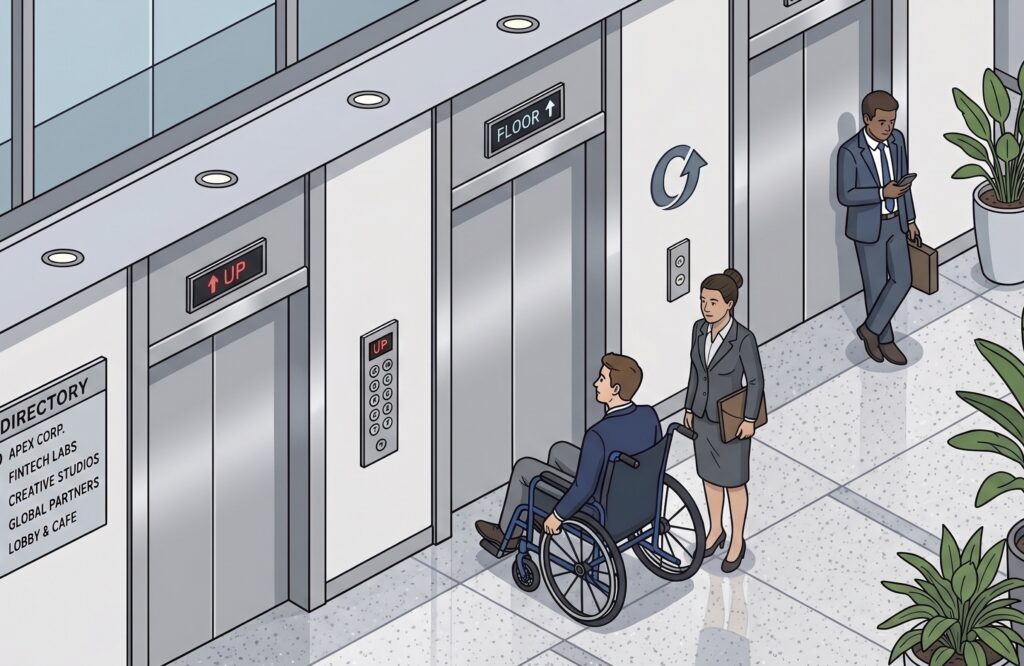
Adapting your home after a spinal cord injury is a foundational part of life care planning. These modifications focus on safety, accessibility compliance, and long-term usability. Structural changes allow you to regain independence, but they have significant financial implications.
Assessing structural accessibility needs
First, identify architectural barriers that may hinder daily life. Common obstacles include:
- Entrance stairs: Steps often become impassable, requiring external redesigns.
- Narrow passageways: Standard hallways and doors typically can’t accommodate a wheelchair.
- Inaccessible bathrooms and kitchens: High counters and cramped layouts prevent you from performing basic self-care tasks.
Experts evaluate your mobility requirements to determine which structural redesigns are necessary to align with your long-term safety goals.
Common modification categories
Modification needs vary based on the severity of the injury, with quadriplegia often requiring more complex retrofitting than paraplegia. Essential upgrades often include:
- Entry and exit: Installing permanent ramps or porch lifts.
- Doorways: Widening interior and exterior doors to a minimum of 32 to 36 inches.
- Bathrooms: Constructing roll-in showers, installing grab bars, and adding non-slip flooring.
- Kitchens: Modifying counter heights and sink access for functional reach.
Structural complexity drives these costs significantly. While minor renovations range from $5,000 to $25,000, complete home retrofits can easily exceed $75,000.
Long-term maintenance and future upgrades
Your home modification budget must look beyond the initial construction. A properly calculated lifetime care plan projects ongoing maintenance for modified structures, such as ramp repairs or lift servicing. It also anticipates future needs based on evolving medical conditions or changes in equipment technology.
Projecting Wheelchair and Mobility Equipment Replacement Cycles
Mobility equipment represents a recurring, long-term financial obligation that extends far beyond the initial purchase. In 2026, life care planning for a spinal cord injury must account for necessary technological advancements. These devices are medical necessities that restore independence and prevent secondary health complications.
Baseline wheelchair cost estimation
The cost of your primary mobility device depends heavily on the level and severity of your injury.
- Manual wheelchairs: Standard custom models for paraplegia average around $2,500 to $6,000. These require upper-body strength for propulsion.
- Power wheelchair systems: Essential for individuals with quadriplegia or those with limited upper-body function, these units cost between $20,000 and $45,000. Higher-end models featuring tilt, recline, or standing capabilities can exceed these figures.
- Customization and maintenance: Every chair must fit your specific body size and lifestyle to avoid back pain and pressure ulcers. Projections must also include annual maintenance for tires, bearings, and cushions, which wear out faster than the frame.
Replacement cycle assumptions every three to five years
A common mistake in insurance settlements is assuming a wheelchair will last a decade. Standard medical and legal guidance in 2026 projects replacement intervals of three to five years for both manual and power wheelchairs.
- Standard wear-and-tear: Frequent use on varying terrains degrades safety and performance.
- Evolving patient needs: You may need different support equipment as you regain or lose bodily function over time.
- Reimbursement gaps: Insurance often fails to cover the total cost of high-end custom devices, leaving you with thousands in out-of-pocket gaps every cycle.
Additional mobility-related equipment
A complete lifetime care plan must encompass all supplementary technology required for safe, independent living:
- Component replacements: Power chair batteries typically require replacement every one to two years. Specialized cushions and back supports also have shorter life cycles than the chair itself.
- Adaptive transportation: A wheelchair-accessible van is a significant lifetime expense, typically costing $50,000 to $80,000 with an expected replacement every five to seven years. Automobile hand controls for paraplegic drivers start at roughly $2,500 but can reach $15,000 for advanced computer systems required for quadriplegia.
- Advanced assistive tech: Wearable robotic exoskeletons or standing frames help improve bone density and cardiovascular health, but come with high price tags, often $70,000 or more.
Accounting For Lifetime Earning Loss And Medical Inflation Adjustments
Securing a fair average settlement for spinal cord injury requires more than just adding up current bills. Your legal and economic team must quantify how the injury erodes your future wealth and how rising costs will eat away at your compensation over decades.
Here are core financial damage components that utilize structured legal valuation principles common in 2026 personal injury litigation:
Evaluating lost future income potential
A central component of your claim is quantifying your loss of earning capacity—the wages you would’ve earned had the injury not occurred.
- Pre-Injury trajectory: Vocational experts assess your education, skill set, and past promotions to project what your career would have looked like without the injury.
- Post-injury limitations: Vocational specialists determine what career paths remain viable for you, given your physical or cognitive limits.
- Lifetime wage loss: Economists project your total lost income until your anticipated retirement date. This is a staggering figure; fewer than 30% of survivors with severe spinal injuries return to full-time work.
Inflation adjustments in long-term medical care
Lifetime medical projections must reflect the reality that healthcare service costs rise faster than general inflation—often at a rate of 5% or more annually.
- Service cost increases: Your plan must account for the increasing cost of personal attendant care, which can range from $15 to $25 per hour for aides and $50 to $100 per hour for skilled nursing.
- Future value erosion: Without proper adjustments, a settlement that seems large today will fail to cover medications, hospital care, and specialized assistive technology in 20 or 30 years.
Actuarial and economic forecasting methods
Attorneys use actuarial data and expert economic testimony to convert these future losses into a single “present-day” compensation value.
- Present value calculations: This math ensures that the lump sum you receive today is enough to fund your projected lifetime needs when invested properly.
- Life expectancy tables: Actuaries use detailed tables to estimate how many years of care and lost wages your settlement must cover based on your age and injury level.
- Structured settlements: Many catastrophic injury victims opt for structured arrangements that provide predictable, tax-beneficial payments over time rather than a single lump sum.
How RMD Law Can Help a Spinal Cord Injury Settlement
Securing a complete spinal cord injury settlementrequires specialized advocacy in medicine, economics, and law. Our team provides the specialized guidance needed to make sure that you aren’t shortchanged.
1. Coordinate with life care planning and medical experts
We collaborate with life care planners to forecast every medical and personal care need. We integrate opinions from neurologists and surgeons to validate your specific treatment requirements.
2. Build a complete economic damages package
Our team aggregates all categories of loss—including home modifications, mobility equipment, and lost income—into a persuasive framework.
3. Ensure future-focused settlement strategies
We prioritize your lifetime care needs over immediate expenses. Our strategy anticipates evolving medical conditions, so that you can have a well-funded recovery.
4. Negotiate aggressively with insurance companies
We challenge low offers that fail to reflect the human and financial toll of disability. We use expert-backed evidence to push insurers to account for long-term impacts.
5. Prepare for litigation when necessary
We build every case as if it’ll proceed to trial to maximize our leverage. If an insurance company refuses to be reasonable, our team is ready to present your story to a jury.
Moving Toward Your Future
A spinal cord injury creates a massive financial burden that rarely fits into a standard insurance payout. To secure your future, your claim must consolidate every critical component of lifetime care: immediate home modifications, recurring mobility equipment replacement cycles, millions in lost future wages, and rising medical inflation.
Expert-supported valuation via a life care plan is the only way to achieve a truly fair spinal cord injury settlementthat protects your dignity. Remember to seek legal guidance to have your future care needs properly evaluated. An experienced spinal cord injury lawyer can help you coordinate with the right experts to push for maximum recovery.
Contact RMD Law for expert legal guidance on your spinal injury claim.
FAQs
Attorneys collaborate with medical experts, economists, and life care planners to project your lifetime care needs based on your injury. They estimate costs for ongoing treatment, rehabilitation, assistive devices, and potential complications, while also factoring in long-term healthcare inflation.
A life care plan outlines every expected medical and personal need tied to your injury, from immediate treatment to long-term support. It provides a detailed roadmap of costs required to maintain your health, independence, and quality of life over time.
Vocational experts analyze your education, skills, and physical capacity to see how your injury limits your ability to work. They determine what jobs, if any, remain realistic, forming the basis for calculating lost earning potential.
Medical inflation directly impacts how far your settlement will stretch over time, as healthcare costs tend to rise faster than general inflation. Without proper adjustment, your compensation may fall short of covering future treatments and essential care.
You can typically choose between receiving a lump sum or a structured settlement, depending on your financial strategy and long-term needs. Each option offers different advantages in managing large compensation amounts over time.

- Traumatic Brain Injury Long-Term Effects and How to Secure Your Settlement - October 20, 2026
- 2026 Updates to California E-Bike and Motorized Scooter Sidewalk Laws - October 15, 2026
- Map of Level 1 Trauma Centers in Northern California: Where to Go When Seconds Count - October 13, 2026