Key Takeaways
A tripping hazard at EV charging stations often comes from exposed cables, poor layout design, and low visibility conditions in California parking lots
- EV charging cables often cross walkways and disrupt pedestrian movement in busy parking areas, creating preventable risks for pedestrians.
Digital infrastructure in parking lots increases risk in poorly designed spaces
- Charging stations add physical equipment like cables and connectors to walking paths, raising accident risk in shared pedestrian-vehicle zones.
Visibility issues turn simple pathways into accident zones
- Low lighting and dark-colored cables make hazards harder to detect, especially at night or in covered parking structures.
Liability depends on who controlled and maintained the hazard area
- Property owners, charging network operators, and EV users may share responsibility under California premises liability rules.
Quick action helps preserve critical evidence after an accident
- Photos, surveillance footage, and maintenance records often determine fault in EV charging station injury claims.
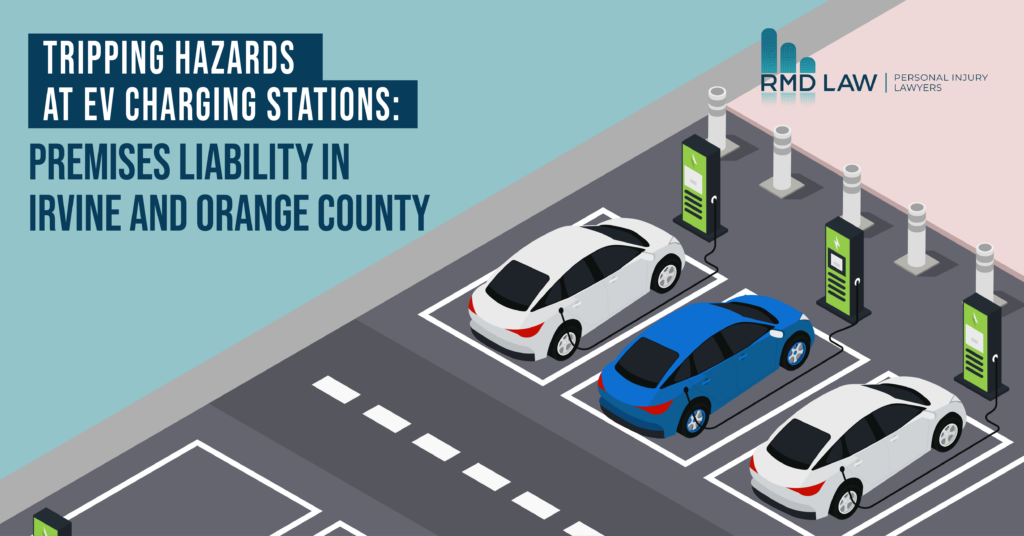
Tripping Hazards at EV Charging Stations: Premises Liability in Irvine and Orange County
EV charging stations are becoming more common in Irvine, Orange County, and other parts of California. Shopping centers, office complexes, and mixed-use developments install them to meet the growing demand from electric vehicle drivers.
This expansion changes how parking lots function; they are now also a place to power up cars. But new infrastructure often brings overlooked risks, especially in shared parking spaces. Unlike traditional parking hazards, there is physical equipment such as cables, connectors, and charging units in pedestrian spaces.
That combination can create unexpected tripping hazard conditions for people walking through. Injuries in these areas may raise premises liability issues under California law.
We break down common hazards at EV charging stations, who may be legally responsible when injuries happen, and how building codes and accessibility rules influence safety and liability in California parking lots.
4 Common EV Charging Cable Hazards in Parking Lots
EV charging stations introduce physical equipment into spaces meant for steady foot traffic, creating real risk when design or upkeep falls short. Here are the most common hazards you may run into.
1. Low-visibility cables across walkways
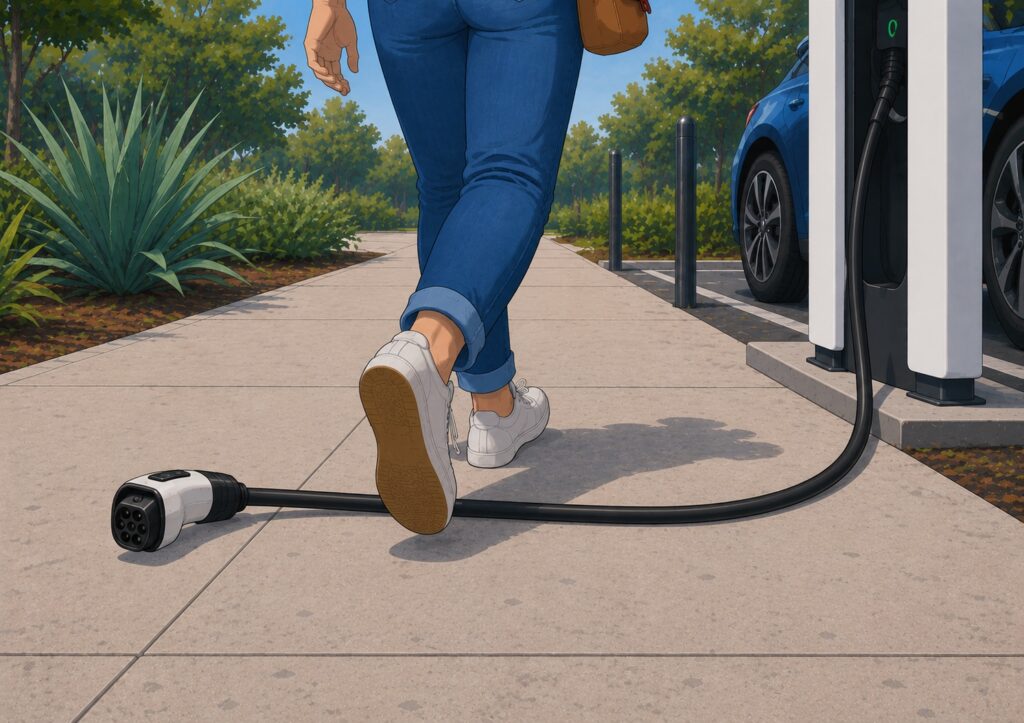
Dark charging cables blend into asphalt and concrete, especially at night or in poorly lit parking structures. You may not notice them until your foot catches on them, making them a tripping hazard. A simple step forward turns into a sudden fall, often with no time to react.
2. Cables obstructing pedestrian paths
Some charging setups run cables directly across walking lanes. You might see them stretched from a charger to a vehicle parked a few spaces away. You end up walking around them, or worse, stepping over them. Either way, your normal path gets interrupted and increases the chance of missteps, especially in crowded areas like Irvine retail centers.
3. Improperly stored or left-out cables
Not every hazard comes from design. Sometimes it comes from how people leave things behind. Drivers may finish charging and forget to coil cables properly. Maintenance crews may delay cleanup between users. This results in cords lying loose on the ground, twisted or half-hidden near parking stalls.
4. Poorly placed charging stations
Some parking lots install EV chargers without separating vehicles from pedestrian movement. You end up walking through active charging zones to reach your car or exit the lot. When layout forces people into shared vehicle-and-cable spaces, risk rises. Tight spacing, awkward angles, and overlapping traffic paths all increase the risk of injury.
Who is Liable for EV Charging Station Injuries?
After a fall in an EV charging area, one question matters: Who controlled the space where you got hurt? Here’s how liability usually breaks down.
Property owners and commercial landlords
The property owner carries the primary duty to keep the premises reasonably safe for visitors. That includes parking lots at places like Irvine retail centers, office parks, and mixed-use developments.
You expect safe walkways when you step out of your car. Owners must inspect the area, fix known hazards, and design parking layouts that don’t put pedestrians in unsafe positions. When they ignore those responsibilities, risk shifts onto visitors.
Charging network operators
Companies like ChargePoint or Electrify America install and manage the charging equipment itself. Their role matters when poor installation or unsafe layout contributes to an injury.
If a station design forces cables across walking paths or lacks proper safety controls, the operator may share responsibility. The key question becomes whether the equipment setup created avoidable danger.
Negligent EV users
Sometimes the issue starts with how a driver uses the equipment. A cable left stretched across a walkway or improperly returned after use can create a direct obstacle. Intent doesn’t matter in most premises liability cases. Careless behavior that creates a tripping hazard in a shared space can still support a claim if it leads to injury.
Shared liability in California
California follows a comparative fault system. That means responsibility doesn’t sit with just one party. Instead, the court can divide fault among the property owner, operator, driver, or, if applicable, even the injured person. Your compensation adjusts based on those percentages. That’s why these cases often involve multiple defendants and competing insurance claims.
How Building Codes and ADA Compliance Impact Liability
EV charging stations don’t just raise practical safety issues. Here’s how compliance plays into liability.
1. Blocked accessible pathways under ADA rules
ADA rules require clear, accessible walking routes in public spaces. EV charging cables that cross or narrow these routes can interfere with safe passage for people using wheelchairs, walkers, or strollers. You might not notice the issue until movement becomes restricted. If the design fails to meet accessibility standards, it is evidence for your premises liability claim.
2. Unsafe or unclear EV station layout
Some charging stations place equipment in ways that force pedestrians into shared vehicle zones. You end up walking through active charging areas to reach exits or storefronts. That kind of layout increases the likelihood of contact among people, cars, and cables. When the risk is built into the design, it’s harder for property owners to argue it was unforeseeable.
3. Lack of proper cable management systems
Well-designed stations use retractors, overhead supports, or organized routing to keep cables off walkways. When those systems don’t exist, cables often end up on the ground or stretched across walking paths. That creates a direct tripping hazard in high-traffic areas. Simple design choices here often determine whether a space feels safe or not.
4. Insufficient lighting in charging zones
Poor lighting makes it harder to spot cables, uneven surfaces, or elevation changes. EV charging stations often sit in corners or less-trafficked sections of parking structures, where lighting naturally drops. You may not see the hazard until you’re already stepping into it. That delay in visibility plays a role in preventable injuries.
5. Non-compliance with local building safety standards
Areas like Irvine and Orange County set local building codes for safe walkway design and pedestrian access. These standards exist to reduce preventable injuries in commercial spaces. When a property ignores them, it weakens its defense after an accident. Compliance issues often become a key factor in proving fault.
How RMD Law Can Help Tripping Hazard Victims
Liability after a fall at an EV charging station may involve complex finger-pointing. We step in to manage the legal machinery and protect your right to compensation so you can focus on your physical recovery.
1. Identifying all responsible parties
We investigate every layer of ownership to hold the right entities strictly accountable. Depending on who controls the space, liability often stretches across property owners, EV charging network operators, and third-party maintenance contractors.
2. Securing and preserving evidence
Busy commercial locations like the Irvine Spectrum Center routinely overwrite their security footage within days. We act immediately to demand preservation of surveillance video and maintenance logs, laying the foundation of evidence for your claim.
3. Proving negligence and foreseeability
We systematically dismantle the defense’s arguments. Our team demonstrates that the tripping hazard was foreseeable and proves that the responsible parties failed to take reasonable steps to protect pedestrians.
4. Shielding you from insurance disputes
EV charging accidents often trigger massive conflicts between multiple insurance companies, with each adjuster trying to shift the blame to someone else. We act as your legal shield, cutting through the corporate disputes and forcing the insurers to treat your claim fairly.
5. Evaluating your total damages
A severe fall disrupts your entire financial stability. We calculate the actual cost of your accident and pursue maximum recovery for your medical bills, rehabilitation costs, and lost wages.
When Convenience Meets Risk
EV charging stations are convenient, but they also introduce new and foreseeable tripping hazard risks in California parking lots. As these setups expand across Irvine and Orange County, the mix of cables, pedestrian paths, and vehicle movement creates conditions in which accidents can occur with little warning.
When injuries occur, responsibility doesn’t always fall on one party. Property owners, charging network operators, and EV users may all share liability depending on how the hazard developed and who controlled the area.
These cases also require a close review of the facts. Layout design, lighting, maintenance practices, and compliance with safety rules can strongly influence the outcome of a premises liability claim.If you or someone you know has been injured due to a tripping hazard at an EV charging station, work with a personal injury lawyer. Contact RMD Law today to evaluate your case, identify responsible parties, and guide you through the process of seeking compensation under California law.
FAQs
A tripping hazard at EV charging stations usually comes from cables, connectors, or an uneven parking lot layout. These obstacles can sit in walking paths and cause people to lose balance, especially in low-light conditions or crowded commercial areas.
Liability often depends on who controlled or maintained the area where the injury happened. Property owners, charging network operators, and sometimes EV users may all share responsibility depending on how the premises liability issues are developed.
Yes. Poor lighting makes it harder to see cables, curbs, or layout changes in parking areas. This delay in visibility increases the chance of a tripping hazard leading to preventable injuries, especially at night or in covered garages.
Yes. ADA rules require accessible and unobstructed pathways in public spaces. If charging cables or equipment block those routes, it may create compliance issues that also support a premises liability claim if someone gets injured.
You should document the scene, seek medical care, and report the incident to the property manager. Evidence like photos and surveillance footage can become important if you later pursue a premises liability claim.

- Traumatic Brain Injury Long-Term Effects and How to Secure Your Settlement - October 20, 2026
- 2026 Updates to California E-Bike and Motorized Scooter Sidewalk Laws - October 15, 2026
- Map of Level 1 Trauma Centers in Northern California: Where to Go When Seconds Count - October 13, 2026