
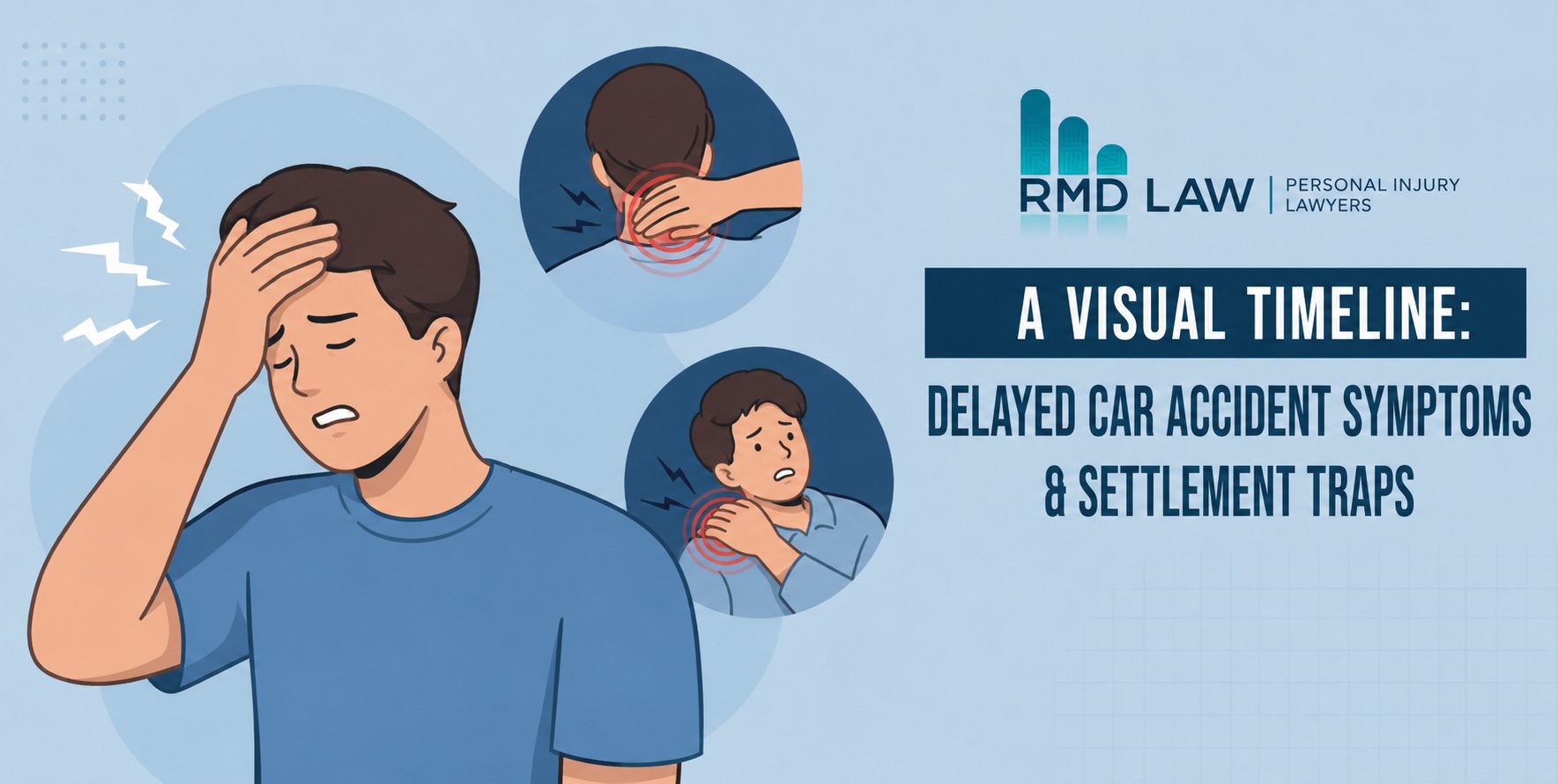
Key Takeaways
Delayed car accident symptoms often appear hours or days after a crash because the body’s stress response can temporarily mask pain and other injury warning signs.
- Adrenaline and cortisol may reduce pain perception during the critical first 48 hours after a collision.
Some of the most common crash-related injuries develop gradually rather than immediately.
- Whiplash, concussions, and herniated discs frequently become noticeable days or weeks after the accident.
Feeling fine after a collision does not guarantee the absence of injury.
- Many victims discover neck pain, headaches, cognitive issues, or nerve symptoms only after returning to normal activities.
Early settlement offers can create financial risks when injuries have not fully developed.
- Insurance companies will seek to resolve claims before future treatment needs and long-term symptoms become clear.
Prompt medical evaluation helps protect both your health and your injury claim.
- Early documentation creates a treatment timeline that connects delayed symptoms to the original crash.
A Visual Timeline of Delayed Car Accident Symptoms & Settlement Traps
Many victims feel fine right after a car crash, but notice pain and other symptoms days later. That delay stems from the body’s stress response, in which adrenaline and other hormones mask injuries and create a temporary sense of normalcy.
The frustration hits when symptoms show up after you’ve already spoken with an insurance adjuster or thought about a settlement. Injuries like whiplash, concussions, and herniated discs build gradually instead of appearing immediately after impact. These delayed symptoms after a car accident can affect both your recovery and the value of your claim.
Insurance companies may push for early settlements before the full picture becomes clear. If you accept too soon, you risk having to cover future treatment costs on your own.
This visual timeline breaks down when common injuries appear and why timing plays a critical role in protecting your health and financial recovery.

The First 48 Hours: The Adrenaline Mask
The moments after a car accident can feel surprisingly deceptive. You step out of your vehicle, exchange information, and even tell others that you’re fine. Then, a few days later, the pain arrives.
1. What happens inside the body
Your body responds to a collision by activating its fight-or-flight response. As adrenaline and cortisol surge through your system, your heart rate increases, your senses sharpen, and your body focuses on immediate survival. This natural response can temporarily reduce your perception of pain, making injuries seem less serious than they actually are.
During this period, many victims underestimate the severity of their condition because the body’s stress response masks symptoms that have not fully developed.
2. Common misconceptions
The adrenaline mask often leads to assumptions that can delay treatment:
- “I feel fine, so I’m probably okay.”
- “No symptoms means no injury.”
- “I don’t need a medical evaluation.”
Unfortunately, many injuries do not follow that timeline. Soft-tissue damage, head injuries, and spinal injuries frequently become more noticeable after the body’s stress response fades.
3. Why the first 48 hours matter
The first two days after a crash provide the earliest opportunity to identify developing injuries. As adrenaline levels decline, symptoms such as neck pain, headaches, dizziness, stiffness, and cognitive difficulties emerge.
Early medical evaluations can document these symptoms and establish a clear treatment timeline. That documentation becomes important later if your injuries worsen or questions arise about when your condition began.
Visual Timeline: When Delayed Injuries Commonly Appear
Many people expect symptoms to appear immediately after a crash. In reality, some of the most common injuries develop gradually as inflammation increases, damaged tissues respond to stress, and daily activities reveal problems that weren’t obvious right away.
This delay explains why many victims initially believe they escaped serious harm, only to discover days or weeks later that something is wrong.
Day 1–3: Whiplash symptoms begin
Whiplash is one of the most common forms of delayed car accident symptoms, particularly after rear-end collisions. The injury occurs when the neck rapidly snaps back and forth, stretching muscles, ligaments, and other soft tissues beyond their normal range.
Typical symptoms
- Neck pain and stiffness
- Reduced range of motion
- Shoulder pain
- Headaches
Why are symptoms delayed
Inflammation develops gradually after a soft-tissue injury. During the first day, you may feel only mild soreness. As swelling increases and muscles tighten, discomfort becomes significantly more noticeable. For example, you might wake up the morning after a crash feeling slightly stiff, then struggle to turn your head by the third day.
Day 2–7: Concussion and mild TBI symptoms appear
Not every brain injury causes an immediate loss of consciousness. Concussion and mild traumatic brain injury symptoms develop over several days, making them easy to overlook at first.
Typical symptoms
- Persistent headaches
- Dizziness
- Balance problems
- Brain fog
- Difficulty concentrating
- Sleep disturbances
Why are symptoms delayed
The brain can continue responding to trauma long after the initial impact. Cognitive problems become more apparent when you return to work, school, or other activities that require sustained focus. Someone may feel fine after the crash but notices several days later that reading, screen time, or routine tasks feel unusually exhausting or difficult.
Week 1–4+: Herniated disc symptoms develop
Spinal injuries take even longer to appear. A herniated disc occurs when the cushioning material between spinal vertebrae pushes outward and irritates nearby nerves.
Typical symptoms
- Back pain
- Numbness or tingling in the arms or legs
- Radiating nerve pain
- Muscle weakness
Why are symptoms delayed
Disc inflammation also develops slowly. As swelling increases and nerves become compressed, symptoms can intensify over time, especially during normal movement and physical activity. What starts as mild lower back soreness during the first week may progress to shooting leg pain, numbness, or weakness several weeks later.
These types of car accident delayed symptoms catch victims off guard because the connection to the original crash may not seem obvious at first.
The Settlement Trap: Why Fast Money Can Cost More Later
As delayed symptoms emerge, accident victims face another challenge: pressure to settle before they fully understand the extent of their injuries. What seems like a quick solution can become a costly mistake if medical complications appear later.
How the settlement trap works
Insurance adjusters contact victims soon after a crash, sometimes within days. At that point, you may still feel relatively normal or only have mild symptoms. Because serious injuries can take time to develop, an early settlement offer may arrive before your diagnosis is complete.
Once you accept a settlement and sign a liability release, you give up the right to pursue additional compensation for that accident. If new symptoms appear later, you have limited options for recovering those costs.
Common adjuster tactics
Insurance companies do not always have a complete picture of your condition when they make an offer. Some adjusters emphasize quick payment, suggest that your injuries are minor, or encourage immediate resolution before treatment progresses. This creates a sense of urgency at a time when your medical situation is still evolving.
Potential consequences of settling too early
Accepting a settlement before your condition stabilizes can leave you responsible for expenses that were impossible to predict immediately after the crash. Additional doctor visits, diagnostic testing, physical therapy, specialist care, and lost income can exceed the amount of an early offer.
Warning signs before accepting an offer
Consider slowing down if your symptoms continue to change, treatment is ongoing, or you have not received a specialist evaluation. When your long-term prognosis remains unclear, waiting for a better understanding of your injuries helps you make a more informed decision about any settlement offer.
How RMD Law Can Help Personal Injury Victims
When symptoms appear days or weeks after a crash, proving the connection between your injuries and the accident can become more challenging. Legal guidance can help with your claim while you focus on recovery.
1. Document delayed symptoms
Delayed injuries often require more than a single medical record to tell the full story. RMD Law gathers documentation showing how symptoms developed over time and links them to the original collision. A timeline is important when insurers challenge the severity or cause of an injury.
2. Coordinate medical evidence
A strong injury claim relies on clear medical evidence. RMD Law works with medical records, diagnostic imaging, treatment notes, and specialist evaluations to demonstrate how an injury progressed after the accident. Documentation can help explain why symptoms did not appear immediately after the crash.
3. Evaluate settlement offers
Insurance companies sometimes present settlement offers before a diagnosis is complete. RMD Law reviews proposed settlements to determine whether they account for current and future damages. This can prevent injured victims from accepting compensation that falls short of their long-term needs.
4. Calculate long-term damages
The true cost of an injury often outlasts initial treatment. Future medical care, rehabilitation expenses, lost earning capacity, and ongoing pain affect the value of a claim. RMD Law evaluates these losses to ensure they are properly considered.
5. Protect legal rights
California personal injury claims involve deadlines, documentation requirements, and negotiations with insurance companies. RMD Law guides clients through the process, protects their rights, and advocates for compensation that reflects the full impact of their injuries.
When Real Recovery Begins
Feeling fine after a car accident does not always mean you’re uninjured. Many crash-related conditions develop gradually, and new symptoms appear days or even weeks after the collision. Seek medical attention when symptoms arise to support both your recovery and your ability to document the injury.
The same caution applies to settlement offers. Accepting compensation before your condition becomes clear leaves you responsible for future medical costs and other losses.
If you were injured in a California crash and later developed symptoms, an experienced car accident lawyer can help you understand your options and protect your claim. RMD Law can document your injuries, evaluate settlement offers, and pursue the compensation you may deserve.
Contact RMD Law today for a free consultation.
FAQs
Delayed car accident symptoms often appear within 24 hours to several weeks after a crash. Soft tissue injuries, concussions, and spinal damage can take time to surface as inflammation builds and adrenaline wears off, making early symptoms easy to miss.
Your body releases adrenaline and stress hormones during a crash, which can temporarily mask pain and injury signals. Once those levels drop, symptoms like stiffness, headaches, or dizziness become more noticeable.
Common delayed symptoms after a crash include neck pain, headaches, brain fog, dizziness, back pain, and radiating nerve discomfort. These signs often point to whiplash, mild traumatic brain injuries, or disc-related injuries.
Yes. Delayed symptoms can impact how insurance companies evaluate your claim, especially if there is a gap between the crash and treatment. Early documentation helps connect injuries to the accident and supports your case.
Yes. Even if you feel fine, some injuries take time to develop. A medical evaluation creates a record that helps detect injuries early and supports both your recovery and any future legal claim.

- Why Wrong-Way Crashes Are Increasing in Orange County at Night - September 24, 2026
- Safest Places to Ride in Orange County - September 22, 2026
- School Zone Pedestrian Accidents in California: Who’s Liable? - September 17, 2026