Key Takeaways
- Recent research suggests that larger pickup trucks and SUVs may be contributing to rising pedestrian fatalities.
- Taller front ends and expanding blind spots can make it more difficult for drivers to see people walking nearby.
- Taller front ends and expanding blind spots can make it more difficult for drivers to see people walking nearby.
- Pickup trucks are among the state’s most common vehicles.
- Four of the five best-selling new vehicles in Texas are pickup trucks.
- Four of the five best-selling new vehicles in Texas are pickup trucks.
- Larger blind spots can make pedestrians more difficult to see.
- These visibility limitations are especially important in intersections, parking lots, crosswalks, and neighborhoods.
- These visibility limitations are especially important in intersections, parking lots, crosswalks, and neighborhoods.
- Both drivers and pedestrians can help reduce the risk of accidents.
- Drivers should account for larger blind zones while pedestrians should avoid assuming they are visible to drivers of large trucks and SUVs.
- Drivers should account for larger blind zones while pedestrians should avoid assuming they are visible to drivers of large trucks and SUVs.
- Blind spots do not excuse negligent driving.
- Pedestrians injured because a driver failed to exercise reasonable care may have legal options.
“Everything is bigger in Texas” is more than just a familiar saying. It’s reflected in the pickup trucks and SUVs that dominate roads across the state. But as these vehicles have grown larger over the past two decades, recent research and investigations have raised concerns that the risks facing pedestrians may be growing as well.
From taller front ends to expanding blind zones, researchers have identified vehicle design changes that may make it more difficult for drivers to see pedestrians. For a state where pickup trucks are among the most common vehicles on the road, these findings deserve attention.
This article explores what the latest research reveals about larger vehicles and pedestrian safety, why these findings are especially relevant in Texas, and what both drivers and pedestrians can do to help reduce the risk of accidents.
How Do Bigger Trucks Increase Risks for Pedestrians?
A recent investigation by The New York Times examined how the increasing size of pickup trucks and SUVs may be contributing to the rise in pedestrian fatalities in the United States. Drawing on federal crash data, vehicle-dimension records, crash reconstruction analysis, and interviews with researchers, the investigation concluded that larger vehicles may be “killing thousands of pedestrians who otherwise might have survived.”
For many years there were steady improvements in pedestrian safety on American roads. Beginning around 2009, however, that trend reversed, with pedestrian fatalities increasing by approximately 75%. According to the investigation’s statistical model, an estimated 200 to 400 pedestrians each year might not have died if vehicles had remained more similar in size to those from 25 years ago.
The investigation identified two primary vehicle design changes that may be increasing the risk to pedestrians: taller front ends and larger blind zones.
Modern vehicle hoods now average about three feet high, roughly a foot taller than many older passenger cars. Because vehicle hoods are designed to absorb impact, lower-profile cars are more likely to carry a pedestrian onto the hood during a collision. Taller front ends, however, are more likely to strike pedestrians higher on the body and push them forward into the vehicle’s path, increasing the risk of severe injuries.
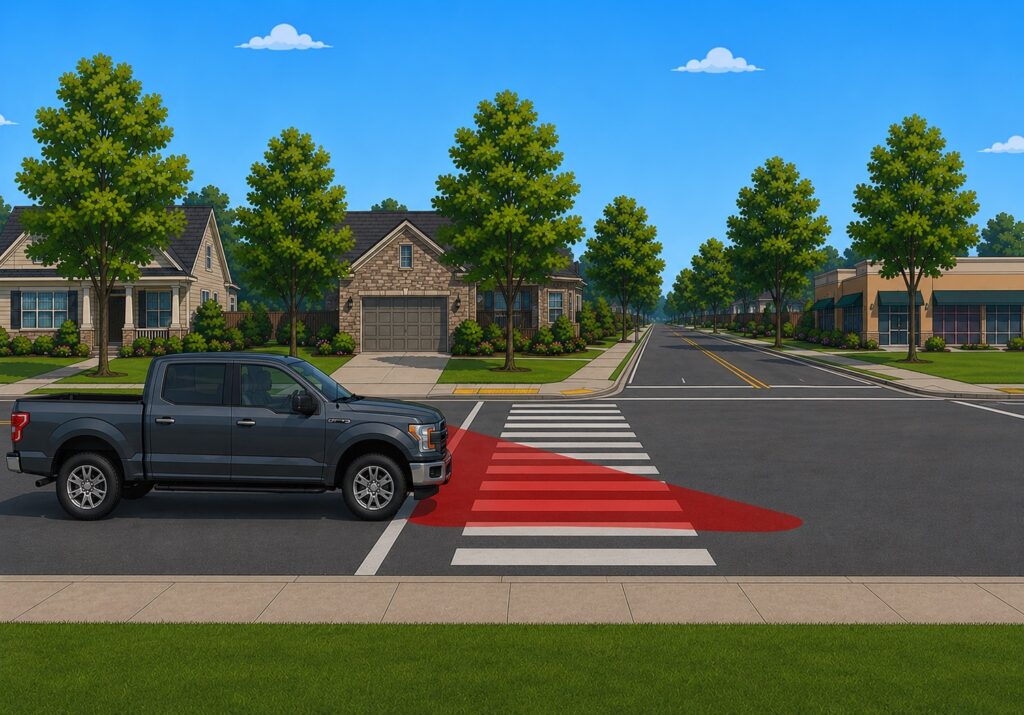
The investigation also found that front blind zones have expanded significantly. Using 3D scans of popular pickup trucks, researchers found that the Chevrolet Silverado’s front blind zone nearly doubled compared to earlier models. The GMC Sierra and Toyota Tacoma increased by about 60%. The Ford F-150 also increased by approximately 25%. The investigation also noted that thicker A-pillars, which are engineered to strengthen a vehicle’s roof and help protect passengers during rollover crashes, can reduce a driver’s visibility near the front corners of the vehicle. Separate research from the Insurance Institute for Highway Safety (IIHS) has also found that vehicles with larger blind zones are more likely to strike pedestrians while turning.
Why Are Blind Spots Dangerous for Pedestrians?
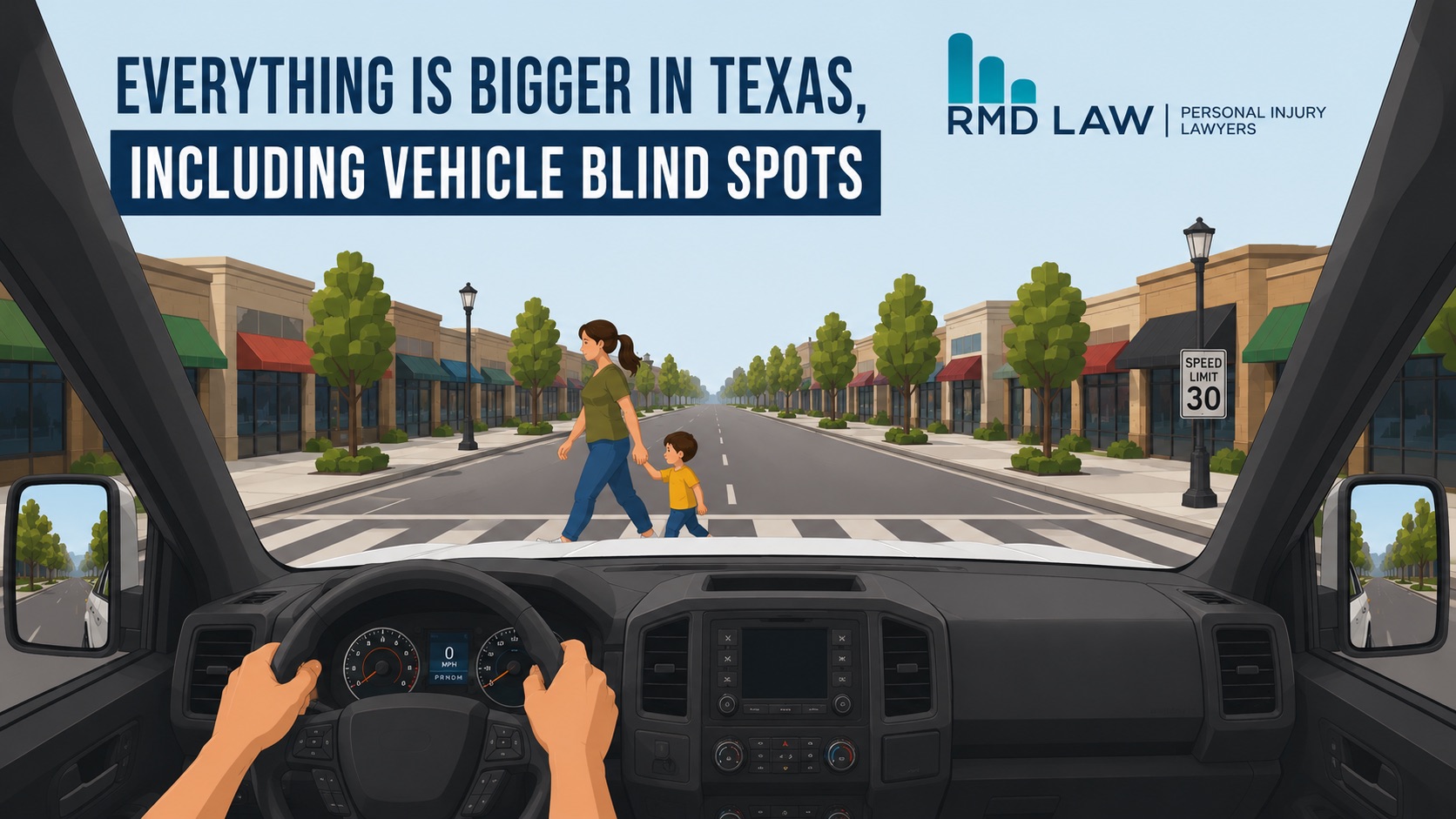
A blind spot is an area around a vehicle that the driver cannot see through the windshield, side windows, or mirrors. While every vehicle has blind spots, they tend to become larger as vehicles grow taller and wider. This can make pedestrians, including children, shorter adults, wheelchair users, and people pushing strollers, more difficult to see from the driver’s seat.
These visibility limitations can create risks in everyday situations. A pedestrian crossing in front of a stopped pickup truck may be hidden as the vehicle begins moving. Similar dangers can occur in parking lots or when a driver turns right at an intersection while focusing on other traffic.
These risks are not just theoretical. In a widely reported Texas case, a young child was fatally struck in a driveway after being hidden in a vehicle’s front blind zone. The incident highlights how limited visibility around larger vehicles can have devastating consequences.
Why Do Texas Pedestrians Face Unique Challenges?
The New York Times investigation has particular relevance in Texas, where full-size pickup trucks are part of everyday life. Recent sales data from CarEdge illustrates just how prevalent they are: four of the five best-selling new vehicles in Texas are pickup trucks.
At the same time, Austin and other Texas cities are becoming increasingly walkable. Continued downtown redevelopment, mixed-use neighborhoods, expanding trail systems, and vibrant entertainment districts have encouraged more people to travel on foot. According to the Texas Department of Transportation, pedestrian deaths account for nearly one in five traffic fatalities in Texas. As pedestrian activity grows alongside Texas’s enduring truck culture, more people are sharing roads, intersections, parking lots, and crosswalks with larger vehicles.
What Should Drivers and Pedestrians Learn From This Research?
For drivers, slowing down before turning, checking the area directly in front of the vehicle, and remembering that cameras and sensors do not eliminate every blind spot can help improve pedestrian safety.
For pedestrians, it’s important not to assume a driver can see you, especially when you’re near the front of a large truck or SUV. Making eye contact before crossing, avoiding walking directly in front of larger vehicles, and giving them extra space whenever possible can help you stay out of a driver’s blind zone.
While vehicle design is only one factor in pedestrian safety, greater awareness from both drivers and pedestrians can help prevent avoidable accidents and make Texas roads safer for everyone.
Who Is Liable When a Blind Spot Causes a Pedestrian Accident?
Although larger blind spots can make pedestrians more difficult to see, they do not excuse negligent driving. Texas drivers have a duty to remain attentive, maintain a proper lookout, and exercise reasonable care to help avoid collisions with pedestrians.
If a driver fails to see a pedestrian because they did not adequately check their surroundings or account for their vehicle’s visibility limitations, they may still be held responsible for the accident. Depending on the circumstances, an injured pedestrian may have legal options to pursue compensation for the harm they have suffered.
Conclusion
Everything may be bigger in Texas, including the trucks and SUVs that share the road with pedestrians. While these vehicles aren’t going away anytime soon, understanding how their size can affect driver visibility is an important step toward preventing pedestrian accidents.
The research discussed in this article highlights that awareness matters. Drivers can reduce risk by accounting for larger blind spots and taking extra care in areas where pedestrians are likely to be present. Likewise, pedestrians can help protect themselves by recognizing that they may not always be visible to drivers of larger vehicles.
Greater awareness won’t prevent every collision, but it may be one of the simplest ways to reduce preventable tragedies and make Texas roads safer for everyone.
If you or a loved one has been injured in a pedestrian accident involving a pickup truck, SUV, or another motor vehicle, contact the experienced Texas personal injury attorneys at RMD Law. We can evaluate your case, explain your legal rights, and help you pursue the compensation you may be entitled to recover. Contact us today for a free consultation.
FAQs
Drivers can reduce blind spots by adjusting mirrors properly, checking around the vehicle before moving, slowing down before turning, and remembering that cameras and sensors do not eliminate every blind zone. Extra caution is especially important in crosswalks, parking lots, neighborhoods, and other areas where pedestrians may be present.
Yes. Texas law requires drivers to yield to pedestrians in certain situations, including when pedestrians are lawfully crossing within a marked crosswalk or an unmarked crosswalk at an intersection. Drivers also have a duty to exercise reasonable care to avoid collisions with pedestrians.
Your first priority should be seeking medical attention, even if your injuries seem minor. If possible, report the accident to law enforcement, document the scene, gather contact information from witnesses, and avoid discussing fault with the driver or insurance company before understanding your rights. An experienced pedestrian accident attorney can help evaluate your case and explain your legal options.
In most cases, Texas law gives injured pedestrians two years from the date of the accident to file a personal injury lawsuit. Because exceptions may apply, it’s best to consult an attorney as soon as possible.

- 2026 Updates to California E-Bike and Motorized Scooter Sidewalk Laws - October 15, 2026
- Map of Level 1 Trauma Centers in Northern California: Where to Go When Seconds Count - October 13, 2026
- Is Driving Slower More Dangerous than Speeding? - October 12, 2026